How to measure dog food in grams
Use gram scales and the tare steps below.
Look for a gram amount for that exact food or ask its manufacturer.
Keep their amount and units unchanged. Ask the veterinary team before altering it.
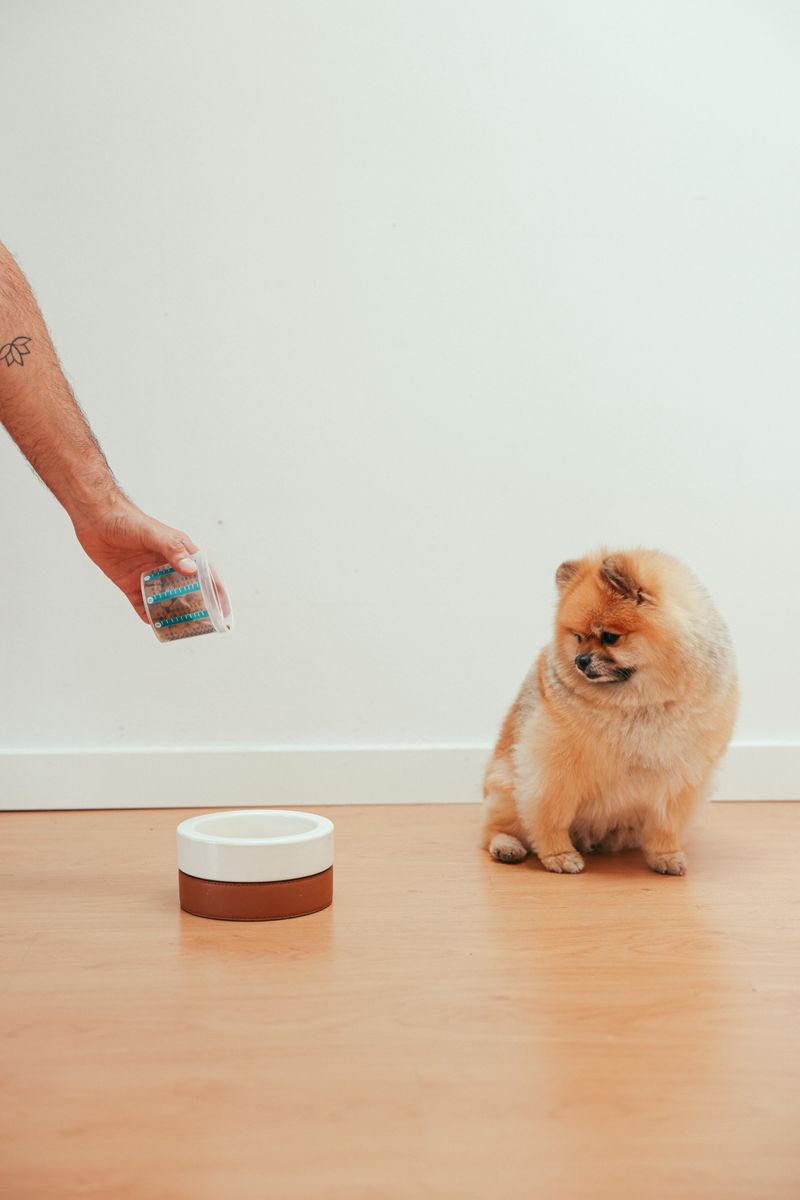
Weigh the food without weighing the bowl
First read the instruction carefully. Check whether the number is for the whole day or for one meal, and whether treats or food used for training have already been counted. Do not turn a daily amount into the amount for every meal.
-
Check the unit.
Confirm the instruction says grams, and whether it covers the day or one meal.
-
Select grams.
Place the scales on a firm, level surface and switch the display to g.
-
Zero the bowl.
Put the empty bowl on the scales, then press zero or tare so the display returns to 0 g.
-
Add the planned food.
Pour slowly until the display reaches the gram amount already set for that meal or day.
If the display becomes negative after you lift the empty bowl, the scales are still subtracting its weight. Put the bowl back, check that the display returns to zero and add the food while the bowl stays on the platform.
PDSA's owner guidance recommends starting with the feeding information on the packet and using electronic scales. It also makes clear that the right amount depends on the individual dog, including factors such as age, health and lifestyle. Accurate weighing helps you follow a plan; it does not prove that the plan suits every dog.
What should the scale display show?
The display should show the food alone after the empty bowl has been zeroed. The example below explains tare. It is not a portion recommendation.
Not a feeding guide: 80 g is not the right amount for a dog merely because it appears in this example. Use the amount in your own established plan.
If your plan gives one amount for the whole day, decide the meal routine separately and divide that same total rather than repeating it. The practical timing options belong in our guide to how many times a day to feed a dog.
Why a scoop can give a different portion
A marked cup tells you volume. Scales tell you mass. Dry foods vary in pellet size, shape and density, so the same-looking cup from two foods need not weigh the same. Even with one food, how someone fills or levels a scoop can change the amount.
What if the instructions only give cups?
Look for a gram amount for that exact product on the pack, feeding table or manufacturer's website. If it is missing, ask the manufacturer what the listed cup amount weighs for that food. Do not use a generic online conversion from another recipe.
| Situation | Useful next step | Avoid |
|---|---|---|
| Instructions only use cups | Get the gram amount for that exact food from the pack or manufacturer. | Borrowing a grams-per-cup number from another food. |
| No scales today | For a known daily ration, the Coe study authors suggest a dry-food measure close to the required volume, measuring the day's total and then dividing it. Treat this as a less accurate fallback. | Calling the cup result equivalent to weighing. |
| Two people feed the dog | Measure one daily total and record what has already been served. | Each person starting again from the full daily amount. |
| The food changes | Read the new food's own feeding and gram information. Plan any mix before weighing it. | Assuming the old food's scoop conversion transfers. |
If you are combining formats, first use the wet-and-dry portion guide to set one plan for the day. Then weigh each planned dry portion rather than adding a full ration of both foods. After measuring, store the remaining food according to its pack.
When measurement is not the missing answer
Scales can tell you what went into the bowl. They cannot tell you by themselves whether that amount is right for this dog. If weight, body shape or muscle condition is changing, use our healthy-weight and body-condition guide to choose the next step. A veterinary feeding plan, an unexplained change or a dog with a health condition should stay with the veterinary team.
Questions about measuring dog food
How do I measure dog food in grams?
Set kitchen scales to grams, put the empty bowl on top, press zero or tare and add food until the display reaches the amount in your dog's existing feeding plan.
How many grams are in one cup of dog food?
There is no universal answer. A cup measures volume while grams measure mass, and different dry foods can have different pellet size, shape and density. Use the gram information for the exact food or ask its manufacturer.
How can I measure dog food without scales?
Scales are the more accurate method. For a known daily ration, the Coe study authors suggest using a dry-food measure close to the required volume, measuring the whole day's amount and dividing it. Treat that as a less accurate fallback, not a universal conversion.
Do I include the bowl's weight?
No. Put the empty bowl on the scales and press zero or tare before adding food. The final display should then show the food alone.
Should I give the daily gram amount at every meal?
Only if the feeding instruction explicitly says the number is per meal. If it gives one daily total, divide that same total across the chosen meals rather than repeating the full amount each time.
Can I use the same cup measurement after changing food?
Do not assume so. Check the new food's own feeding and gram information because a similar-looking volume can have a different weight.
Sources and scope: The recommendation to use packet guidance and electronic scales, and the point that the right food amount depends on the individual dog, follow current PDSA owner guidance. The cup-and-scoop variation, smaller-volume result, gram-scale preference and cup fallback follow the 2019 Coe measuring experiment. That study tested 100 Canadian owners and one dry food, was funded by Royal Canin Canada and measured portions rather than dog-health outcomes. This article gives no universal ration, grams-per-kilogram rule, cups-to-grams conversion, weight-loss plan or replacement for veterinary advice.
Measurement starts after the food-choice question. If you are comparing a suitable nutritional base for a smaller adult dog before working out the daily routine, our guide to choosing food for a small dog explains the pack and veterinary boundaries without supplying a portion.
picked for this page
Where to go next
More from this guide · 11 min read
Dog Food Allergy Symptoms: What They Mean — and What They Don’t
Food allergies in dogs can cause itching, ear trouble and gut signs, but symptoms alone cannot diagnose them. Compare causes and follow the reliable next step.
Read the guide