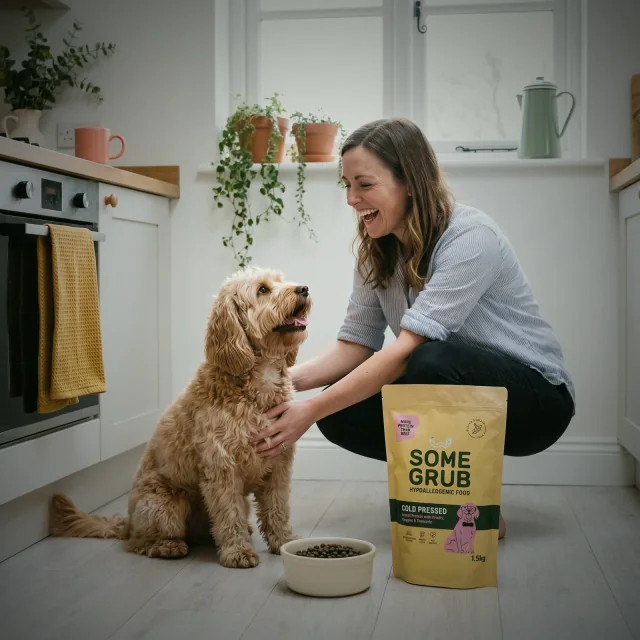
Everyday dinner.
£16.99 / 1.5kg
Complete, cold-pressed food for adult dogs.
Choose 1.5kg, 3kg or 6kg.
Shop foodSome Grub. For the dogs.
Gut-friendly, complete dog food with insect protein. Made in the UK for adult dogs.


For dinner. And very good sits.
£16.99 / 1.5kg
Complete, cold-pressed food for adult dogs.
Choose 1.5kg, 3kg or 6kg.
Shop food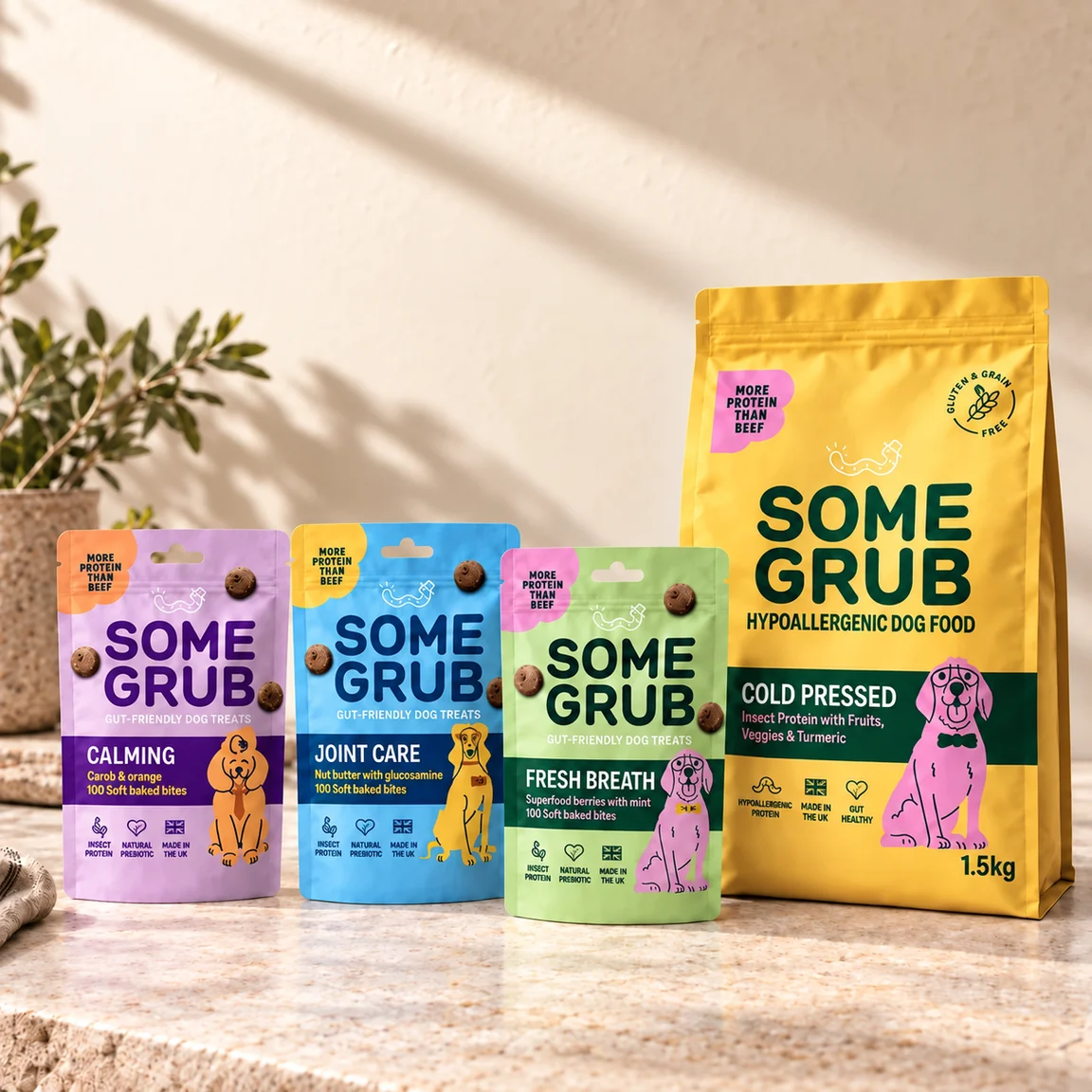
£22.99 one-off
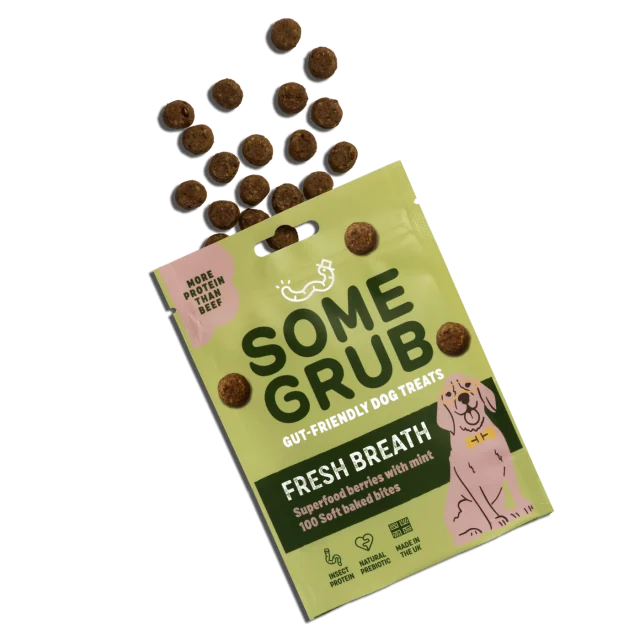
1.5kg food + three 100g treat pouches.
£31.96 separately. Save £8.97.
Shop the bundleSoft-baked treats from 8 weeks. Packs of 3 or 6 pouches.
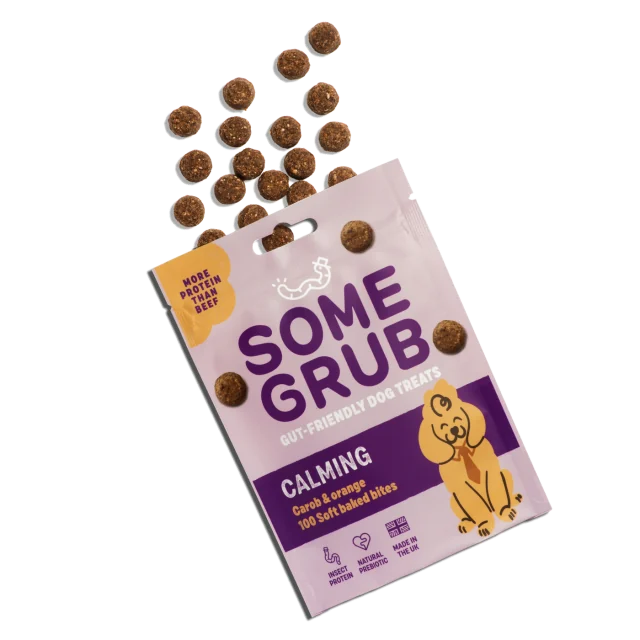
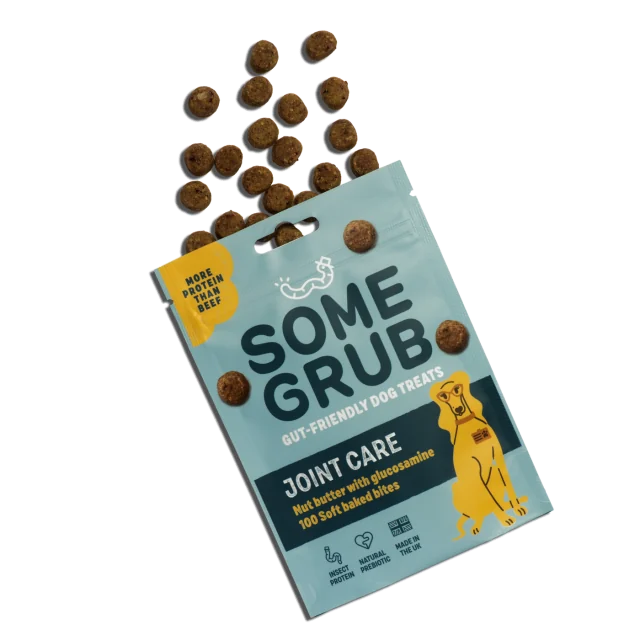
Food for a happier gut, comfortable skin and easier everyday feeding.
Digestible insect protein and chicory prebiotics to feed beneficial gut bacteria.
When food is the trigger, removing the protein your dog reacts to can ease the scratching.

Firmer, more consistent poos are a welcome part of finding food that agrees with your dog.

Complete daily nutrition, with protein and fats to support healthy skin and coat.
Not in the food recipe
Insect protein
instead.
Chicken and beef are among the most commonly reported food allergens in dogs. Insect protein gives sensitive dogs an alternative.
Our food and every treat use insect protein as their animal protein, so rewards needn’t put chicken or beef back on the menu.
No food suits every dog. Check the full recipe for anything your dog needs to avoid.
Why we chose insectsA closer look at dinner
Insect protein is the only animal protein in our food and every treat.
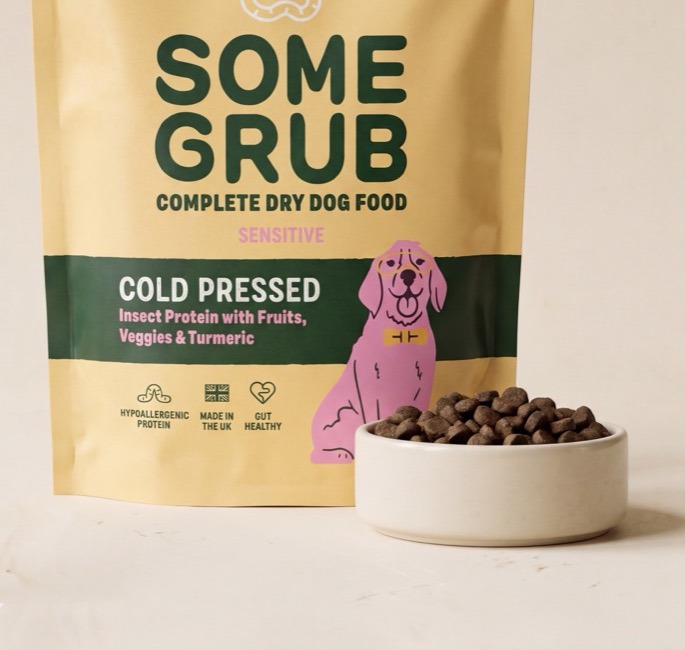

Vegetables, fruit and prebiotic fibre in small cold-pressed pellets. Scoop, weigh and serve.
Dried insect meal (35%), potato, sweet potato, ground peas, pea gravy, insect oil (3%), carrot, apple, seaweed, chicory inulin, fennel seed, sage leaf, thyme, nettle, oregano, chondroitin, glucosamine, turmeric, dandelion root.
Protein: 26.5%. Full nutrition and feeding information.
The bowl inspectors have spoken.
4.65/5 from 279 reviews across our food and treats.
“The first time I offered it to my dog she ate it immediately without any problem.”
“First, Bob absolutely loves the food and picks it out to eat before anything else that might be in his bowl.”
These owners tried our earlier food recipe, before the August 2026 update.
Read the reviews| Dog's weight | Everyday | Active | Bag lasts |
|---|---|---|---|
| 5kg | 90g | 100g | 15–17 days |
| 10kg | 150g | 170g | 9–10 days |
| 20kg | 250g | 290g | 5–6 days |
Starting amounts for adult dogs at a healthy weight, with our food as their only calories. Most dogs start in the everyday column; use the active one for dogs who run, play hard or work. Adjust for body condition, and allow for treats.
1.5kg · 3kg · 6kg
30% off
your first delivery
Then 15% off every delivery.
Every 3 / 4 / 6 / 8 weeks
Skip, change or cancel anytime.
UK delivery £1.99 Free on £30+ orders
Our complete food is formulated for adult dogs. Wait until your dog is fully grown before switching. If they follow a diet prescribed by your vet, speak to the vet before changing it.
Check the food's ingredients and nutrition →Our food uses dried black soldier fly larvae as its animal protein. They're milled into a meal and mixed into the recipe. The finished food comes as small cold-pressed pellets.
Insect protein is unfamiliar to many dogs, but that doesn't make it reaction-proof. Check the full recipe for anything your dog needs to avoid.
Read about insect protein →Yes. The 1.5 kg food bag is £16.99 as a one-off. The Sensitive Dog Intro Bundle is also available as a one-off: one food bag plus a pouch each of Calming, Joint Care and Fresh Breath treats.
There's a 30-day money-back guarantee. Read the guarantee and returns policy for the details.
See the intro bundle →Introduce Some Grub gradually over 5-7 days. Start with around 20% Some Grub mixed with their current food, then increase it a little each day. Go more slowly if your dog needs it.
If you're investigating a suspected food allergy, agree the trial with your vet and keep treats, chews and scraps in the plan too.
UK delivery costs £1.99 and is free on orders of £30 or more. Delivery usually takes 2-3 working days after dispatch.
Read the delivery details →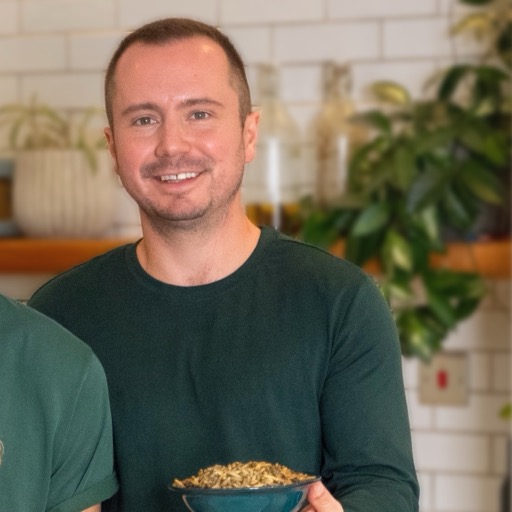
A small UK business. A real person to ask.
A former journalist who covered food startups. Now the person behind Some Grub.
Read our story Ask us somethingSign up for dog-food notes, product news and offers. We'll email your discount code. Unsubscribe whenever you like.