How to choose food for a small dog

There is no one best food for every small dog. Start with a complete food for your dog's stated life stage, use its feeding directions as a starting point, then judge the plan against that individual dog's body condition and health history. A “small-breed” label can be useful pack information, but it is not a universal quality ranking or a medical recommendation.
- Check nutritional purpose. Look for a complete food intended for dogs, rather than assuming a format or front-of-pack phrase answers that question.
- Check the stated life stage. The product should name a life stage that matches your dog. A complete label is meaningful inside that scope, not outside it.
- Check the individual route. Health conditions, a prescribed diet, a notable body-condition change or a feeding difficulty belong with the veterinary team directing the plan.
The first two gates follow the current FEDIAF nutritional guidelines: complete food is sufficient for a daily ration because of its composition when fed as directed, and a complete product intended for a particular life stage should state that stage. That tells you the nutritional role the product is designed to play. It does not establish that the food is ideal for every dog.
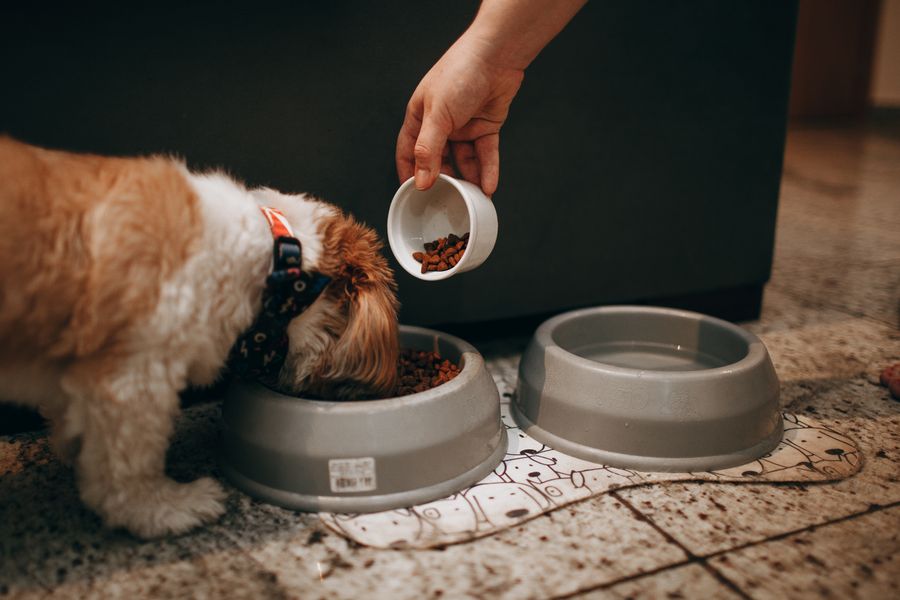
What to look for on the pack first
Choosing food for a small dog does not need to begin with a brand list. Start with the pack's stated nutritional purpose, species and life stage. If you need help identifying those lines or interpreting the rest of the declaration, use our guide to reading a dog-food label.
A complete food for the stated life stage is a sensible nutritional base to investigate. The feeding directions are a starting point, not a diagnosis or a fixed personal prescription. The individual dog still matters: body condition, activity, health history and everything else eaten are part of the wider feeding picture.
Bring the individual dog back into the decision
The Pet Nutrition Alliance advises that the main plan should fit the dog's species, life stage and medical goals. Its guidance is not a product comparison: it is a reminder that a generic pack choice is not the owner of a medical or prescribed plan. If your dog has a condition, is on a prescribed diet or the reason for a change is a health concern, take that plan to the veterinary team rather than using this page to choose a replacement.
The same wider view appears in the WSAVA Nutritional Assessment Guidelines: main food, treats, supplements, food used for medication and chews belong in one assessment against life stage, activity, health and body condition. That does not mean you need to calculate a ration here. It means the food choice should not be judged in isolation.
| If the remaining question is… | Use this route | Why it is separate |
|---|---|---|
| Can this product form the whole ration? | Check complete versus complementary. | That guide owns the exact label-purpose distinction. |
| What does the rest of this label mean? | Read the full dog-food label. | Ingredients and analytical constituents need their own careful reading. |
| How should I turn the directions into a repeatable routine? | Measure the food consistently. | This page does not provide an amount or conversion. |
| Is body condition changing, or is there a health concern? | Check body condition and the next feeding step, then speak to your vet when the concern is medical. | A change in condition or a prescribed diet needs individual assessment. |
| Is the dog pregnant or nursing? | Use the pregnancy and nursing feeding guide. | Pregnancy and lactation have a dedicated life-stage owner. |
Make a short note before a veterinary nutrition conversation
If the choice is not straightforward, a short record makes the next conversation more useful than a vague description of “small-dog food”. Record facts rather than trying to diagnose the reason for a change.
Questions about choosing food for a small dog
Do small dogs need a special small-breed food?
Not automatically. Start with a complete food for the dog's stated life stage and check the individual dog's wider feeding and health context. A small-breed label does not prove that a product is required or best for every small dog.
What does “complete” mean on a small-dog food pack?
It describes nutritional sufficiency for the stated species and life stage when the food is fed as directed. It is a useful first pack check, not a guarantee that every complete food suits every individual dog.
Should I choose food by size, age or health condition first?
Check nutritional purpose and stated life stage first. A health condition, prescribed diet or notable body-condition concern changes the route: use the veterinary plan rather than a generic selection guide.
How much food should a small dog eat?
This guide does not give an amount. Use the exact pack's feeding directions as a starting point and measure consistently; use the separate measurement guide for that practical workflow. Ask the veterinary team when a medical plan or body-condition concern is involved.
Can I use this guide for a pregnant or nursing dog?
No. Pregnancy and lactation have a separate nutritional job. Use the dedicated pregnancy-and-nursing guide and seek veterinary advice for an individual feeding plan.
Sources and scope: The complete-food and life-stage definitions follow the 2025 FEDIAF nutritional guidelines. The individual-plan boundary follows Pet Nutrition Alliance guidance on creating a nutritional plan and the WSAVA Nutritional Assessment Guidelines. This is a healthy-small-dog food-selection field guide only: it does not rank brands, prescribe portions, select medical diets, diagnose a problem or replace veterinary advice.
picked for this page
Where to go next

More from this guide · 11 min read
Dog Food Allergy Symptoms: What They Mean — and What They Don’t
Food allergies in dogs can cause itching, ear trouble and gut signs, but symptoms alone cannot diagnose them. Compare causes and follow the reliable next step.
Read the guide