Dog skin problems and coat changes: what to check first
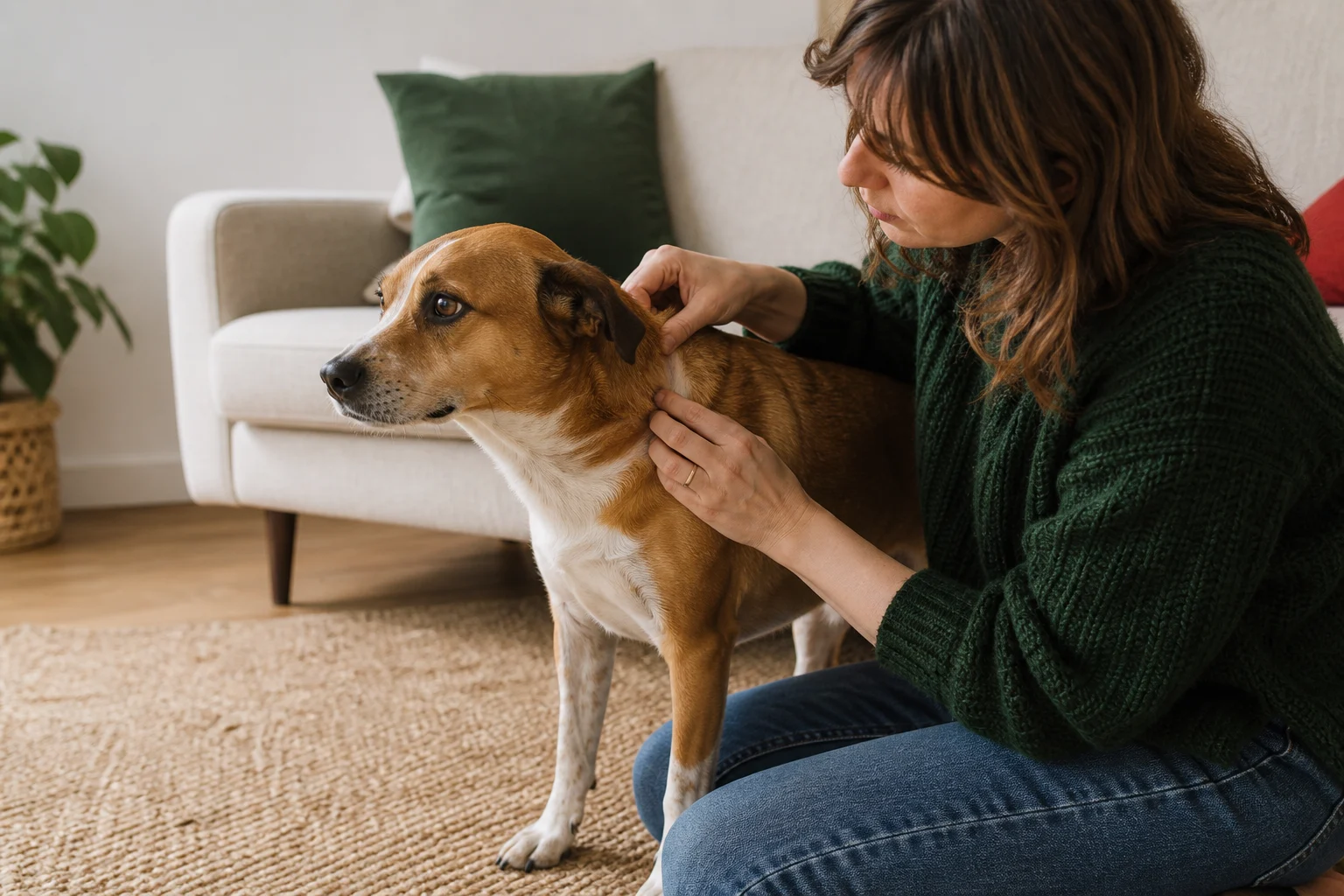
A new skin or coat change is something to notice, not a diagnosis to make from a photograph or a label. If your dog has trouble breathing, facial swelling, collapse or seems severely unwell, call a vet now. Blood, pus, marked pain or a rapidly worsening change needs prompt veterinary advice. Otherwise, record what changed and arrange a check if it persists, returns or worries you.
-
01Call now
Trouble breathing, facial swelling, collapse or a dog that seems severely unwell is an emergency. Call your usual or out-of-hours vet.
-
02Contact promptly
Blood, pus, marked pain, a wet area or a change worsening quickly needs veterinary advice without a home experiment.
-
03Book a check
Arrange a check when a skin or coat problem lasts for a few days, keeps returning, or is making your dog uncomfortable.
-
04Note and recheck
For a small, comfortable change with no red flag, take a dated photo, note what changed and call sooner if it persists or worsens.
These escalation boundaries follow current PDSA skin-problem guidance. They are a reason to contact a veterinary team, not a way to name the cause.
Make one calm observation pass
Skin or coat change means a new, persistent or recurring difference in the skin surface, comfort, smell, moisture, colour, scaling, coat texture, shedding or coverage. It is an observation category, not a diagnosis. Start with what you can describe rather than what you think it is.
When the pattern includes greasiness, an unusual odour, paws, folds or ears, use the dog yeast-infection guide to prepare for the vet check without diagnosing from appearance.
-
01Location
Where is the change? Is it one patch, both sides, paws, ears, belly or somewhere else?
-
02Surface
Note dryness, flakes, moisture, scabs, a smell, or any blood or pus. Do not try to label the condition.
-
03Itch behaviour
Record scratching, licking, chewing, biting or rubbing, and whether it interrupts rest.
-
04Coat change
Note shedding, thinning, a bald patch or a change in coat texture without assuming a nutrient problem.
-
05Timing and whole-dog health
Take dated photos and note progression, recent changes and whether appetite, energy or comfort is different.
The outline is only a location prompt. It carries no medical meaning and cannot identify a skin condition.
What a sign can and cannot tell you
| What you notice | What it cannot prove | Useful next step |
|---|---|---|
| Scratching, licking, chewing or rubbing | Itch, also called pruritus, is a sign. It does not prove an allergy, infection, parasite or food cause. | Record the behaviour and location; ask a vet if it persists, recurs or affects comfort. |
| Thinning coat, bald patches or fur loss | Alopecia means hair is absent where it would normally be present. It does not name the cause or prove a nutritional deficiency. | Make hair loss the main reason for the appointment. Use the fur-loss guide when thinning or a bald patch is the main concern. |
| A change after a food, treat or season change | Timing alone does not show that food is responsible. Do not begin a DIY elimination diet from a skin photograph. | Bring the timing and every food/treat change to the vet; use the food-allergy guide only if that becomes the agreed question. |
| Flea dirt, a flea or paw-focused licking | One visible clue does not explain every skin or coat change. | Use the dedicated flea or paw guide for that dominant concern rather than treating this page as a cause list. |
Merck defines pruritus as itch behaviour and alopecia as hair loss. Those definitions describe a sign, not its cause.
Why food is only one possible question
In pruritic dogs with atopic dermatitis, clinical appearance alone cannot distinguish food-induced from non-food-induced disease. That means a skin or coat pattern cannot prove that food is responsible. The finding comes from a prospective study of dogs already assessed for atopic dermatitis; it does not mean every skin problem is allergic, or that food is never relevant. (Favrot et al., 2010)
Choose the next owner guide only when the concern is clear
- Two or three dated photos in the same light, if you can take them safely.
- Where it started, whether it is spreading, and the main itch or coat change.
- Recent food, treat, environment or routine changes without assuming they caused it.
- Any earlier episodes, what has already been tried, and whether your dog seems otherwise well.
A veterinary team can decide whether more examination or testing is useful. This checklist stores nothing and does not replace that assessment.
Common questions
Can I tell whether my dog's skin problem is an allergy from a photo?
No. A photo can be useful to show change over time, but appearance alone cannot distinguish food-induced from non-food-induced atopic dermatitis, and it cannot diagnose other causes. Use it as part of the history you take to your vet.
When should I call a vet about a skin or coat change?
Call now for breathing trouble, facial swelling, collapse or a dog that seems severely unwell. Seek prompt advice for blood, pus, marked pain or rapid worsening. Book a check when the problem lasts for a few days, recurs or makes your dog uncomfortable.
Does a dull coat or hair loss mean my dog needs a supplement?
No. A coat or hair change does not prove a nutrient problem, and this guide does not recommend supplements. Make hair loss or bald patches the main reason for a veterinary conversation.
Could a food change be causing my dog's itchy skin?
It is one history detail to note, not a conclusion. A skin pattern cannot prove that food is responsible. Keep a complete food and treat history and discuss the next diagnostic step with your vet.
What should I write down before the appointment?
Note location, surface change, itch behaviour, coat change, timing, progression and whether your dog seems otherwise well. Dated photos can help show change, but do not replace an examination.
Sources: current PDSA owner guidance; the Merck pruritus overview; the Merck alopecia overview; and Favrot et al., 2010. This guide gives no diagnosis, treatment, medicine, home remedy, diet trial, supplement recommendation or Some Grub product recommendation.