Dog losing fur: causes, food questions and vet next steps
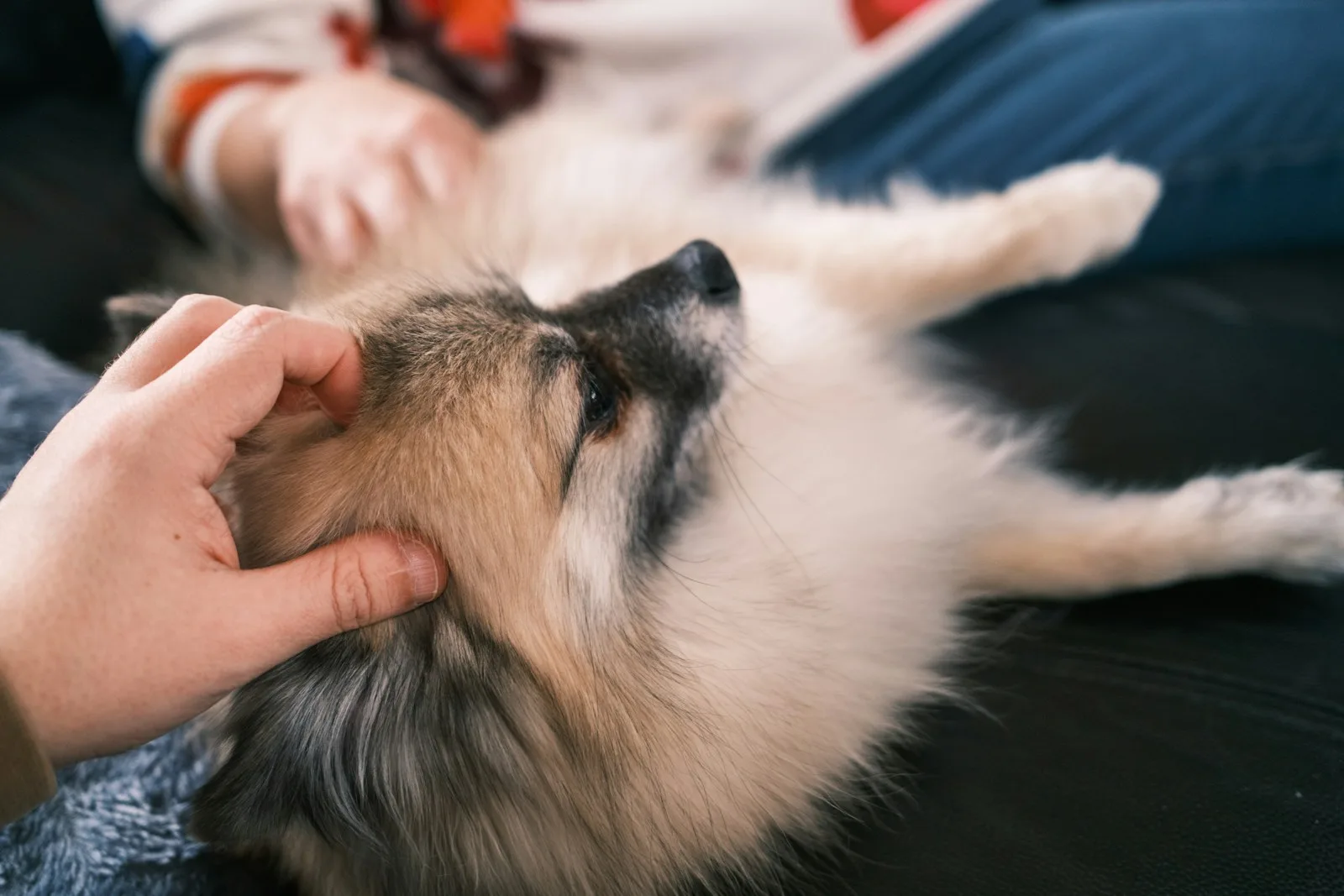
If your dog's coat is visibly thinning or a bald patch has appeared, this is hair loss rather than ordinary moulting and it is worth arranging a veterinary check. Hair loss is a sign, not a diagnosis. Parasites, infection, inflammation or allergy, rubbing or self-trauma, hair-cycle problems and wider health issues can look similar. Loose hair without thinning or bald patches is more likely to be shedding.
Loose hair, no thinning
This is more likely to be shedding or moulting. Use the shedding guide for that separate question.
Thinning or a bald patch
Take dated photos, note the pattern and arrange a veterinary check. A photograph or body location cannot name the cause.
Current PDSA guidance says normal moulting should not leave bald or patchy areas and advises contacting a vet when fur loss appears.
What counts as fur loss?
Alopecia means partial or complete absence of hair where it would normally be present. It describes the missing coat; it does not identify the cause. Shedding or moulting is the replacement of old hair by new hair. Increased loose hair can be part of a normal coat cycle when coverage remains intact.
Hair can be shed from the follicle, break, be damaged through licking or rubbing, or fail to grow normally. That is why the same-looking thin area can lead to different veterinary questions. The distinction and these broad mechanisms follow the Merck Veterinary Manual's alopecia overview.
Make a six-part observation record
An observation record is a short, dated description for the veterinary team. It is not a diagnostic score, and you do not need to inspect sore skin closely.
-
01Location
Where did you first notice missing or thinner coat?
-
02Distribution
Is it one area, several patches, both sides or more widespread?
-
03Progression
Take dated photos in similar light and note whether the area is changing.
-
04Itch behaviour
Record scratching, licking, chewing, biting or rubbing. Pruritus is the clinical word for itch.
-
05Skin surface
Note flakes, scabs, redness, moisture, smell, blood or discharge without naming a condition.
-
06Whole-dog changes
Note appetite, thirst, energy, weight, comfort and recent routine or food changes.
Stop if checking is uncomfortable for your dog. The location and pattern are history for an examination, not an answer by themselves.
What patterns may prompt a vet to consider
The pattern helps organise the history, but it cannot diagnose parasites, infection, allergy, a hair-cycle problem or a wider illness. A veterinary team may need to examine the skin and the rest of the dog before deciding whether any testing is useful.
| What you notice | A broad question for the examination | What it cannot prove |
|---|---|---|
| Scratching, licking, chewing or rubbing | Is itch or self-trauma contributing to broken or missing hair? | It does not identify a parasite, infection, allergy or food trigger. |
| Scabs, flakes, moisture, smell or discharge | Is there a skin-surface problem alongside the hair loss? | Appearance cannot name an infection or select a treatment. |
| A smoother area with little obvious itch | Could hair growth, the hair cycle or wider health need consideration? | Symmetry or body location does not diagnose a hormonal or inherited condition. |
| One area exposed to rubbing or pressure | Could friction, damage or repeated contact be part of the history? | The location still does not exclude another cause or show that rubbing is the whole answer. |
These are deliberately broad cause families from the Merck owner guidance. This is not a condition atlas or a way to diagnose from a photo.
Could food be causing the fur loss?
Food can be one line of enquiry, but fur loss, itch or a bald-patch pattern cannot prove that food is responsible. In dogs with pruritic atopic dermatitis, clinical appearance alone cannot distinguish food-induced from non-food-induced disease. That finding comes from a prospective study of dogs already assessed for atopic dermatitis. It does not mean every case of fur loss is allergic, and it does not mean food can never be involved. (Favrot et al., 2010)
What happens at the vet?
The useful first step is a skin and general-health examination guided by the history you bring. The vet can then decide whether the pattern points to a focused next check or whether more information is needed. This page cannot tell you which test, medicine or treatment an individual dog needs.
Common questions
Is losing fur the same as shedding?
No. Shedding or moulting replaces old hair and can create plenty of loose fur while coat coverage stays intact. Visible thinning, a bald patch or patchy absence of coat is hair loss and is worth a veterinary check.
Can the location of a bald patch tell me the cause?
No. Location, symmetry and pattern are useful parts of the history, but they cannot diagnose a parasite, infection, allergy, hair-cycle problem or wider illness from appearance alone.
Can dog food cause fur loss?
Food can be one possible line of enquiry, but fur loss does not prove it. In pruritic dogs with atopic dermatitis, clinical appearance alone cannot distinguish food-induced from non-food-induced disease. Discuss the whole history with your vet rather than starting a diet trial from appearance.
Should I change food or add a coat supplement?
Not on the basis of a bald patch alone. Hair loss does not prove a nutritional deficiency, and a food switch or supplement could distract from the wider veterinary assessment. Keep the current food and extras list for the appointment.
When is fur loss urgent?
Facial swelling, breathing difficulty or collapse needs emergency veterinary help. Seek prompt advice for blood, pus, marked pain, wet skin, rapid spread or a dog who seems unwell. New thinning or bald patches without those signs still deserve a veterinary check.
- Two or three dated photos in similar light.
- Where it began, how it is distributed and whether it is spreading.
- Any scratching, licking, chewing, rubbing or change to the skin surface.
- Meals, treats, chews, scraps, supplements and flavoured extras.
- Changes in appetite, thirst, energy, weight, comfort, routine or environment.
- What has already been used or changed, without trying anything new from this page.
This checklist stores no health information and does not replace an examination.
Sources: current PDSA alopecia guidance; current PDSA skin-problem guidance; the Merck Veterinary Manual alopecia overview; and Favrot et al., 2010. This guide gives no diagnosis, treatment, medicine, home remedy, diet trial, supplement recommendation or Some Grub product recommendation.