Why Does My Dog Keep Licking Their Paws?
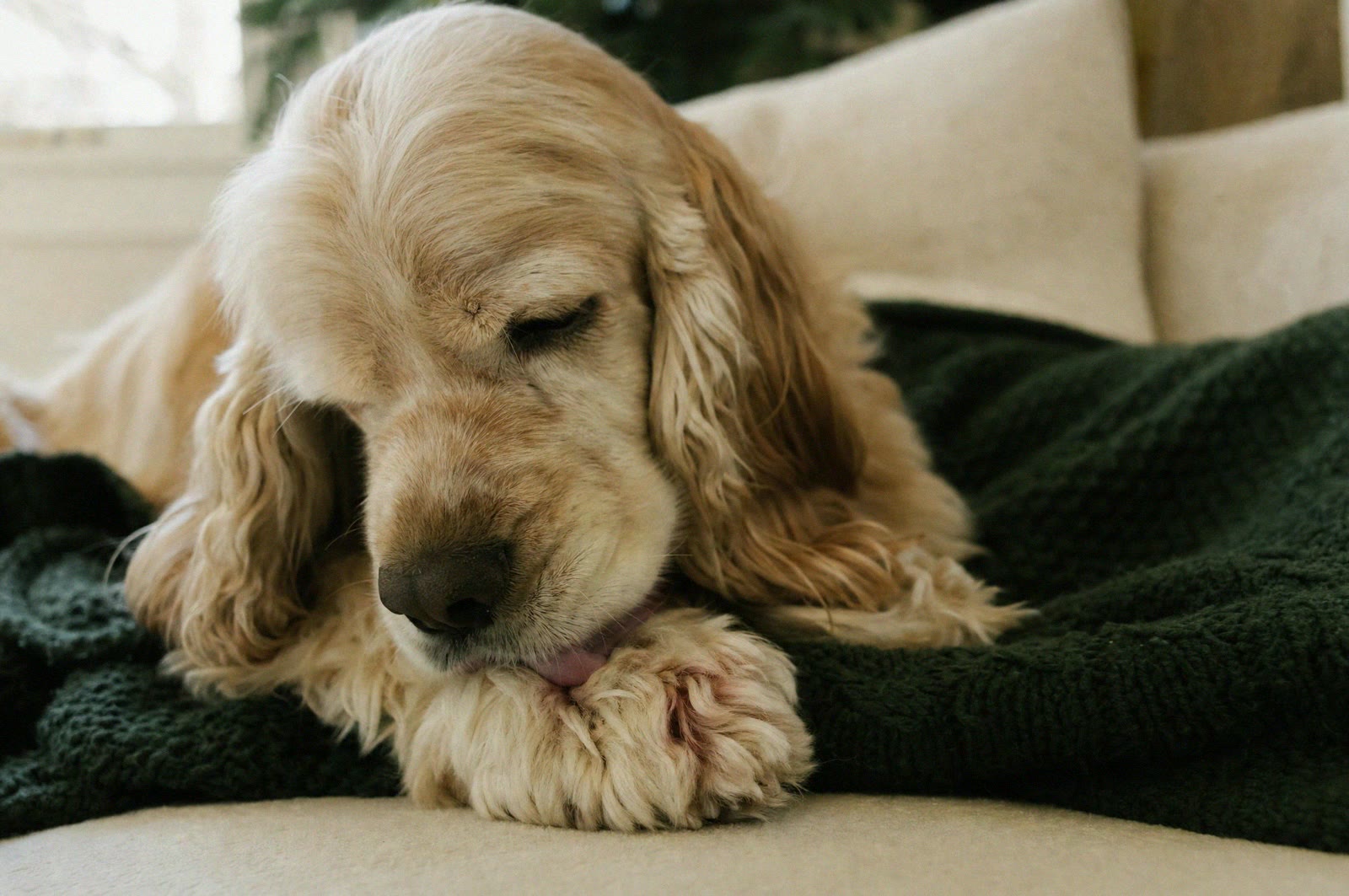
If your dog will not stop licking their paws, you are probably worried and wondering what is causing it. One question many dog owners ask is whether a food allergy could be to blame. The answer is yes - food allergies can cause itchy paws in dogs - but they are only one of several possible explanations.
Paw licking is one of the most common signs that a dog may be experiencing an allergic reaction to something in their diet. However, environmental allergens, fleas, mites and skin infections can produce identical symptoms. Working out whether food is the cause requires some detective work, and this article will walk you through the signs, the process and how to keep your dog comfortable while you investigate.
the short version
- Food allergies are a possible cause of itchy paws in dogs, but not the only one
- Paw licking that is bilateral and year-round may suggest a food-related cause
- Seasonal paw licking is more likely linked to environmental allergies
- A food-elimination diet is the only reliable way to confirm a food allergy
- Several supportive measures can give your dog relief while you investigate
Paw Licking Is One of the Most Common Signs of Food Allergies in Dogs
When dogs develop an allergic reaction to a food ingredient, the immune system responds by releasing histamines and other inflammatory chemicals. These chemicals often affect the skin, and the paws are a favourite location for this reaction to manifest. Unlike humans, who tend to show food allergy symptoms mainly through digestive upset, dogs more commonly express food allergies through their skin.
This is why paw licking is frequently one of the first - and most noticeable - signs that something in your dog's diet may be disagreeing with them. The constant moisture from licking can in turn lead to secondary problems such as yeast infections or sore skin between the toes, so addressing the underlying cause is important.
Why Food Allergies Cause Itchy Paws
A food allergy occurs when the immune system mistakenly identifies a particular ingredient - commonly a protein such as chicken, beef, dairy or wheat - as a threat. The body then mounts an immune response, releasing histamine and other inflammatory mediators.
These chemicals cause inflammation in the skin, which triggers itching. In dogs, this inflammation tends to concentrate in areas with less fur coverage, which is why the paws, ears, armpits and groin are frequently affected. The constant licking is an attempt to relieve the discomfort, but it often makes things worse by irritating the skin further and creating a warm, moist environment where yeast and bacteria can thrive.
Other Causes of Itchy Paws Besides Food
It is essential to understand that food allergy is only one potential cause of paw licking. Before assuming that food is the culprit, consider these other common explanations.
Environmental allergies (atopy) are in fact a more frequent cause of itchy paws than food allergies. Dogs can be allergic to pollen, grass, mould spores, dust mites and other environmental triggers. These allergies are often seasonal, worsening during spring and autumn, though some dogs react to year-round indoor allergens.
Fleas are another very common cause of paw irritation. Some dogs are intensely allergic to flea saliva, and even a single flea bite can trigger widespread itching. Fleas often gather around the feet, making paw licking a hallmark sign.
Mites, particularly those that cause sarcoptic mange or demodectic mange, can also drive intense paw scratching and licking.
Skin infections caused by bacteria or yeast can develop on the paws and cause itching as a primary symptom or as a secondary complication of allergies.
If the paws also seem greasy or unusually smelly, our dog yeast-infection signs guide explains what to record and what needs a veterinary sample.
Contact irritation from chemicals in cleaning products, de-icing salts, or certain grasses can also cause dogs to lick their paws.
Because these causes produce similar symptoms, the pattern of the itching - whether it is seasonal or year-round, whether it affects all four paws or just one - can provide important clues. Food-related paw licking is more likely to be bilateral (affecting both front or both back paws) and to persist throughout the year rather than following a seasonal pattern.
Signs Your Dog's Itchy Paws Might Be Food-Related
While no single symptom can confirm a food allergy, certain patterns make it more likely. Look out for the following.
- Bilateral paw licking - both front paws or both back paws are affected, not just one
- Year-round symptoms - the itching does not follow a seasonal pattern
- Symptoms after meals - the paw licking noticeably worsens after eating
- Additional skin signs - redness, inflammation or recurrent ear infections alongside the paw licking
- No improvement with flea treatment - the itching persists despite effective flea control
- Young to middle-aged onset - many dogs begin showing food allergy signs between one and three years of age
If several of these apply to your dog, food allergy becomes a more likely candidate. However, it is still worth ruling out environmental causes and parasites first, as these are more common.
How to Confirm Whether Food Is the Cause
The only reliable way to determine whether food is causing your dog's itchy paws is through a food-elimination diet. This involves feeding your dog a diet containing a novel protein source (one they have never eaten before) or a hydrolysed protein diet for a period of at least eight weeks.
During this time, no other foods, treats, table scraps or flavoured medications should be given. If the paw licking improves significantly during the elimination phase and then returns when the original ingredients are reintroduced, a food allergy is confirmed.
For a full guide to running an elimination diet safely, see our elimination diet guide.
You may also wish to review our articles on dog food allergies and the difference between food allergies and intolerances for more context before beginning.
If licking has already created a wet, sore patch, use our dog hot-spots guide for the prompt vet-contact and self-trauma boundary.
How to Give Your Dog Relief While You Investigate
While you work through the diagnostic process, there are several things you can do to keep your dog more comfortable.
Keep paws clean and dry - wipe your dog's paws after walks to remove potential irritants. A damp cloth or pet-safe wipe works well.
Use an Elizabethan collar - if your dog is licking to the point of causing damage, a cone can prevent further self-trauma while you address the underlying cause.
Apply a pet-safe moisturiser - cracked or dry paw pads can make itching worse. A canine-appropriate paw balm can help.
Consider omega-3 supplements - omega-3 fatty acids have anti-inflammatory properties that may reduce skin irritation. Discuss this with your vet first.
Bath with medicated shampoo - if a secondary infection is present, your vet may recommend a medicated shampoo to reduce yeast or bacteria.
Always involve your vet in the process, particularly before introducing new treatments or supplements, to ensure they are appropriate for your dog's specific situation.
60-second check
Ears, skin and coat: is food behind it?
Six quick questions to separate food from fleas, pollen and everything else.
We'll email you the 8-week elimination diet guide and a printable symptom tracker. No spam, unsubscribe whenever.
If itching is accompanied by a wider change in the skin or coat, see our skin and coat guide for a practical record of the pattern and the signs that need veterinary attention.
Frequently Asked Questions
Can food allergies cause itchy paws in any breed?
Yes, food allergies can affect any breed. However, some breeds are more predisposed to allergic skin conditions in general, including Labrador Retrievers, Golden Retrievers, Bulldogs and West Highland White Terriers.
How long does it take for a food allergy to develop?
A dog can develop a food allergy at any point in their life, even if they have eaten the same food for years. Food allergies are not typically an immediate reaction - they build up over time after repeated exposure to the offending ingredient.
Is grain a common cause of food allergies in dogs?
Grain is often blamed for food allergies, but studies suggest that proteins such as chicken, beef, lamb and dairy are actually more common culprits than grains. It is worth investigating all ingredients, not just grain.
Will changing my dog's food stop the paw licking?
Not necessarily. A single food change without knowing the specific allergen is unlikely to help. The elimination diet process is important to identify exactly which ingredient is causing the problem.
Can I use allergy tests to find out if my dog has a food allergy?
Blood and saliva allergy tests for food are available, but their reliability is inconsistent. The food-elimination diet remains the gold standard for diagnosing food allergies.
Should I take my dog to the vet for paw licking?
Yes. Persistent paw licking warrants a veterinary investigation to rule out parasites, infections and other medical causes before pursuing a food-allergy diagnosis.
the food behind the guide
One novel protein.
None of the usual suspects.
Some Grub is a cold-pressed, hypoallergenic dog food built around insect protein - a protein most dogs have never met, which is the whole point of a food trial.
See the food →This article is for informational purposes only and is not a substitute for professional veterinary advice. If your dog is persistently licking their paws, please consult a qualified veterinarian to obtain an accurate diagnosis and appropriate treatment plan. Last updated: April 2026.
picked for this page
Where to go next

About itching · 9 min read
Best Dog Food for Itchy Skin? A UK Guide
The best food for an itchy dog depends on the cause. Compare hydrolysed, novel-protein and limited-ingredient options, plus when food will not help.
Read the guide