Bottle Feeding a Newborn Puppy: A Safe First-Day Guide

Call a veterinary practice before hand rearing a newborn puppy. Use commercial puppy milk replacer and puppy feeding equipment, then follow the exact label and the plan from the team caring for the puppy. Feed in a natural belly-down, horizontal position with the head neutral. Never feed a puppy on their back or force milk in with a syringe. Stop and contact a vet immediately if milk appears at the nose or breathing changes.
The first call comes before a web schedule
Have these three things ready for the veterinary team
-
What has changed?
Say whether the puppy cannot nurse from their mother, has not fed, or seems too weak to suck. -
What is available?
Have the puppy milk replacer label and the feeding kit to hand. Do not substitute cow's milk, supermarket pet milk or a human baby bottle. -
What have you seen?
Note any milk at the nose, breathing change, poor suck, or concern that the puppy is not thriving.
Why this needs a veterinary plan
Hand rearing replaces more than a feed. PDSA advises contacting a veterinary practice before starting and straight away if a puppy is not thriving. The practice can set a plan for the individual puppy and show you what is appropriate when the normal suck-and-swallow route is not working.
This page deliberately gives no one-size volume, calorie calculation or bottle timetable. The correct amount and frequency depend on the puppy, the milk replacer and the plan from the veterinary team. Use the product instructions as part of that plan, not an online chart.
Use a natural nursing position
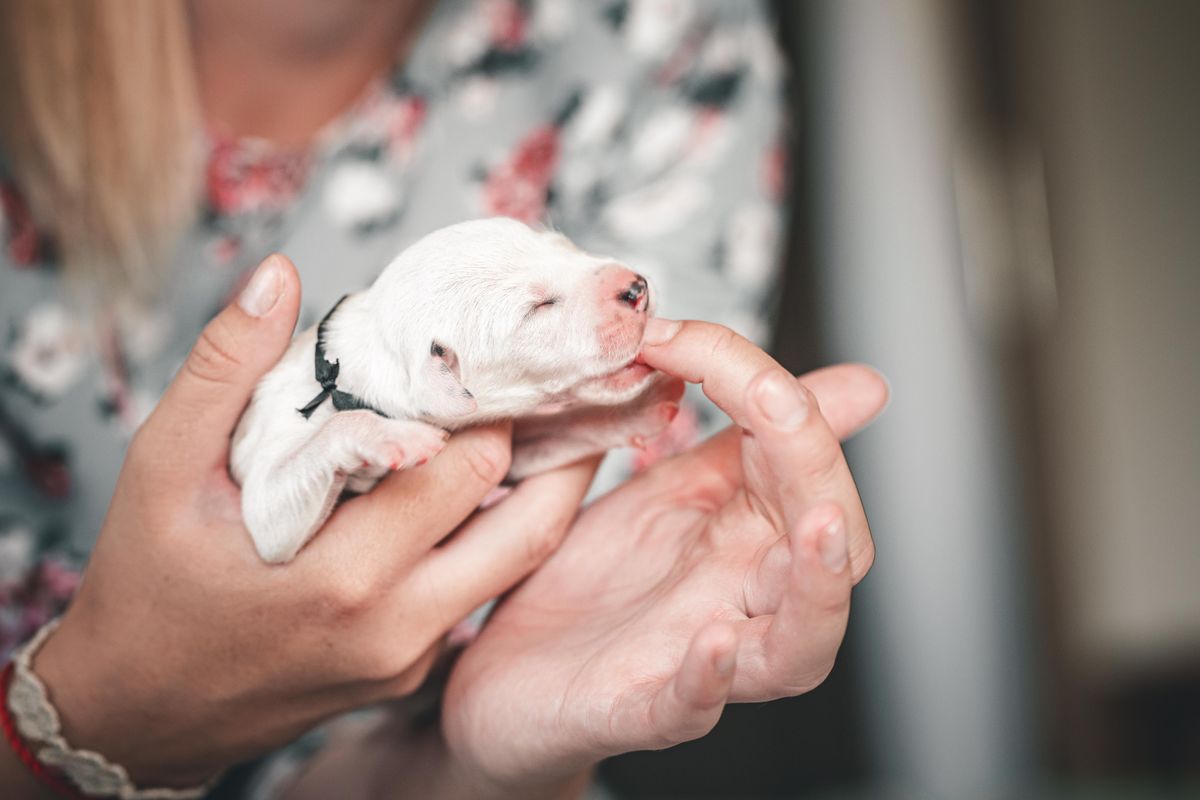
The position and flow matter because a newborn puppy cannot safely manage a fast or forced feed. Keep the puppy horizontal and belly-down, as they would be when nursing from their mother. Keep the head neutral. Let the puppy control the suck rather than pushing milk in.
A simple safety comparison
Keep the nursing position natural
Belly-down and supported
Place the puppy on their belly, horizontal and fully supported, with the head in a neutral position. Use controlled bottle flow and follow the veterinary plan.
Not on the back, not forced
Do not feed a puppy on their back. Do not pour, squeeze or force milk from a bottle or syringe. If the puppy cannot suck, call the veterinary team.
Keep the next question with the right guide
Neonatal hand rearing is not ordinary puppy feeding, and it is not a dairy-treat question. These links keep the later, separate decisions in the pages that own them.
After the immediate plan
Four distinct follow-up routes
Ordinary milk
Read why ordinary milk is not a puppy replacer for the separate dog-and-dairy question.
A weaned puppy refusing food
Use our guide to a weaned puppy losing interest in food once normal food feeding is established.
Growth after weaning
See feeding a growing large-breed puppy after weaning for a different life stage.
Later life-stage changes
Use when puppy food changes later when the veterinary team says that transition is relevant.
Questions about bottle feeding a newborn puppy
What milk should I give a newborn puppy?
Use a commercial puppy milk replacer and a puppy feeding kit, following the exact label and veterinary plan. Do not use cow's milk, supermarket pet milk, homemade mixtures or a human baby bottle as substitutes.
What position should I use to bottle feed a puppy?
Keep the puppy belly-down, horizontal and fully supported, with the head neutral, as in a natural nursing position. Do not feed a puppy on their back.
What if milk comes out of a puppy's nose?
Stop feeding, check breathing and contact a vet immediately. Milk at the nose can mean aspiration is possible, and a breathing change after feeding is an emergency.
Can I syringe feed a newborn puppy?
Do not force milk from a syringe. PDSA says syringe feeding needs great care because the puppy cannot control the flow. If the puppy is too weak to suck, contact the veterinary team.
How much and how often should I feed an orphaned puppy?
There is no one web volume, calorie formula or timetable that is safe for every newborn puppy. Follow the exact milk-replacer label and the individual plan from the veterinary team.
Sources and scope: This guide follows PDSA's hand-rearing-puppies guidance and VCA's orphaned-puppy feeding guidance. It is general information, not a feeding prescription or substitute for veterinary advice.
picked for this page
Where to go next

More from this guide · 11 min read
Dog Food Allergy Symptoms: What They Mean — and What They Don’t
Food allergies in dogs can cause itching, ear trouble and gut signs, but symptoms alone cannot diagnose them. Compare causes and follow the reliable next step.
Read the guide
