Weight-Loss Dog Food: How to Choose Without Guessing

the short version
- There is no universally best weight-loss dog food. Start with an individual weight-management plan, not a bag labelled light or low calorie.
- A complete food can be sufficient for its stated life stage when fed as directed. That describes its nutritional role, not whether it suits every weight plan.
- Where substantial restriction is needed, a purpose-formulated therapeutic weight-loss diet may be the safer route under veterinary direction.
- The useful comparison is the agreed plan, exact food label, measured intake and the dog's monitored response. Treats and other extras belong in the same picture.
There is no universally best weight-loss dog food. The right choice depends on an individual nutritional assessment, the degree of restriction needed, life stage, medical needs and monitored response. A food bag cannot make that decision by itself.
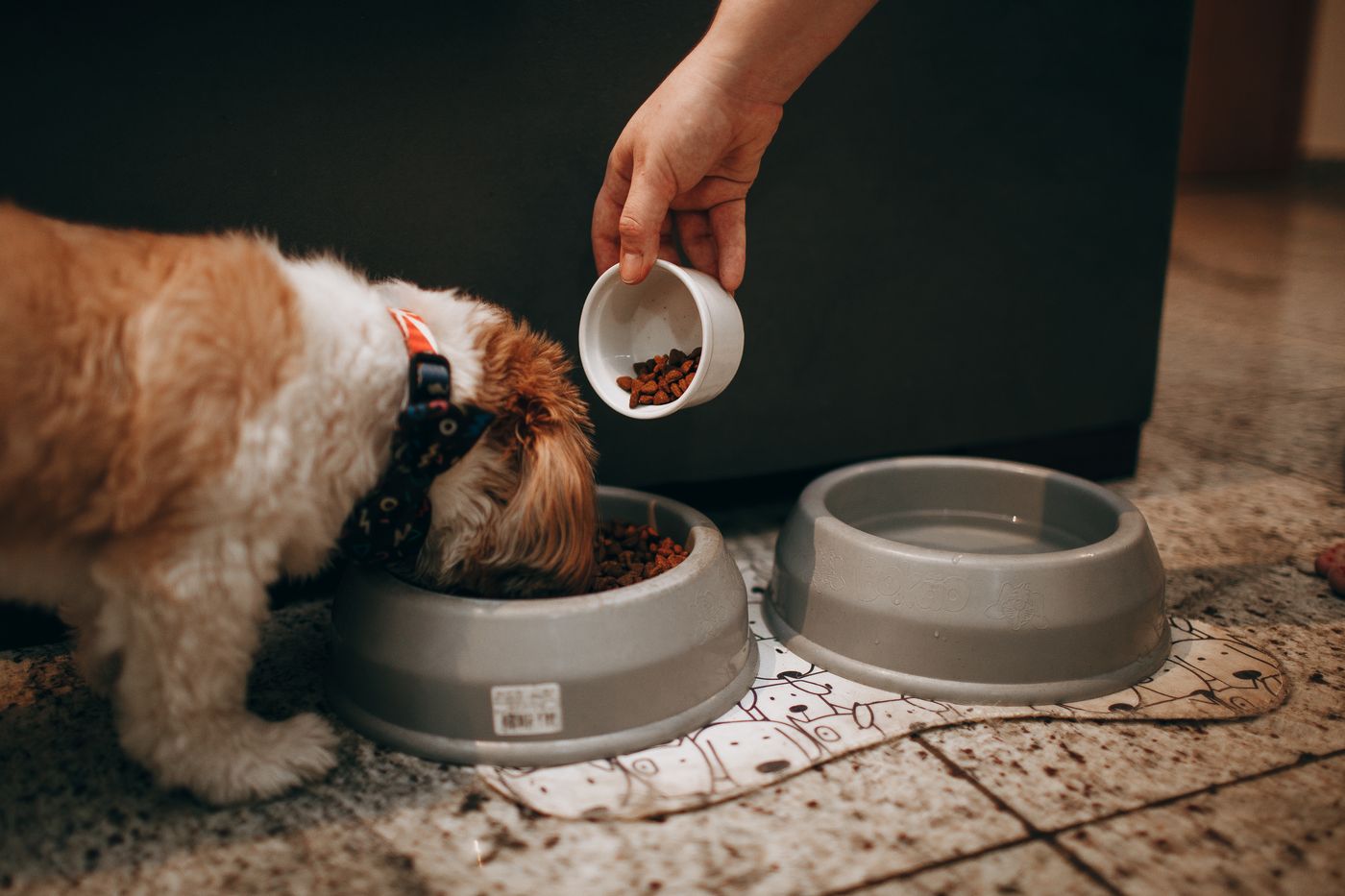
If a vet has identified a weight-management need, ask what the plan needs the food to do before comparing labels. For some dogs, a measured complete everyday food within that plan may be appropriate. Where the required restriction is significant, the American Animal Hospital Association guidance says a purpose-formulated, nutrient-fortified therapeutic weight-loss diet may be needed under veterinary direction (Cline and colleagues, 2021). This guide does not rank bags, set a calorie target or replace that assessment.
Start with the plan, then compare the food
-
1
Set the individual starting point
Record body and muscle condition, life stage, health history, routine and the reason weight needs attention with the veterinary team.
-
2
Choose the food's job
Decide whether the plan can use an ordinary complete food with measured intake, or whether significant restriction calls for a therapeutic weight-loss diet.
-
3
Check the exact label
Match the food's complete or complementary role, life-stage statement and energy information to the agreed plan.
-
4
Measure and monitor
Serve the agreed amount consistently, count every extra and take the response back to the team rather than making a universal percentage cut.
AAHA frames weight management as an individual, monitored process. A nutritional assessment can include food history, activity and environment alongside body weight, body condition and muscle condition. That is why two dogs with the same scale weight may not need the same food route or intake (Cline and colleagues, 2021).
What a food label can tell you
The first retail screen is not a marketing phrase such as light, weight control or slim. It is the food's intended nutritional role. FEDIAF defines complete pet food as sufficient for a daily ration for the stated species and life stage when fed as directed. Complementary food needs to be combined with other food. Neither label tells you that a food is automatically right for every dog or every weight plan (FEDIAF, 2025).
| Food check | What it can establish | What it cannot establish |
|---|---|---|
| Complete or complementary | Whether the food is intended to form a daily ration on its own or alongside other foods | Whether it is suitable for this dog's weight plan |
| Stated life stage | The life-stage context the food is designed for | A personal feeding prescription |
| Energy information for the exact food | What the selected food contributes within the plan | The right amount without the whole intake and monitoring |
| Therapeutic weight-loss direction | That a veterinary plan may need a purpose-formulated food when restriction is substantial | A reason to change a prescribed diet without the prescribing team |
The terms are useful because they stop a common shortcut: treating any complete food as a weight-loss food, or any lower-energy phrase as a personal recommendation. If the current food is already part of a veterinary plan, do not swap it from a shelf comparison alone.
Keep the whole intake visible
The main bowl is only one part of the plan. AAHA's nutritional-history guidance includes meals, treats, table food, supplements and food used for medication. Putting these on one ordinary-day note can show where the plan needs discussion without pretending every dog needs the same cut (Cline and colleagues, 2021).
Main meals
Write down the exact food and the measured amount that the plan uses.
Treats and chews
Keep rewards visible rather than adding them after the bowl has been planned.
Table food and supplements
Include food additions, even when they feel too small to matter alone.
Medication food
Note food used to give tablets so the whole day can be considered together.
Use the healthy-weight guide for the body and muscle-condition check that comes before a food decision. Our dog calorie calculator guide explains why an estimate is only a starting point. Once a plan is agreed, measure the portion consistently, and use the treat-accounting guide to make extras visible.
When a therapeutic diet needs to lead
A therapeutic weight-loss diet is not simply a more virtuous everyday food. It is a purpose-formulated route for a plan that needs meaningful restriction while still meeting nutritional needs. That choice belongs with the veterinary team, especially where the dog has illness, muscle loss, a prescribed diet, an unexplained change or a marked body-condition concern.
ring your vet if
Do not use this guide to set a calorie target, choose a rapid-loss plan or replace a prescribed diet. Contact the veterinary team promptly if weight or appetite has changed unexpectedly, the dog seems unwell, or a planned restriction is hard to carry out safely.
The practical aim is a plan that can be followed and checked. Take the exact food label, a measured-intake note and the list of extras to the appointment. That is more useful than arriving with a universal calorie percentage copied from the internet.
Frequently asked questions
What is the best weight-loss dog food?
There is no universally best option. The right food follows an individual assessment, the degree of restriction needed, life stage, medical needs and monitored response. A veterinarian may recommend a purpose-formulated therapeutic weight-loss diet when substantial restriction is needed.
Is a food labelled complete automatically suitable for weight loss?
No. Complete describes a food's nutritional role for its stated species and life stage when fed as directed. It does not say that the food is suitable for every dog's weight plan or that its feeding guide is a personal prescription.
Should I choose light or weight-control food from a shop shelf?
Use the terms as prompts to check the exact label and discuss the plan, not as a shortcut to a personal recommendation. The required restriction, the dog's health and every other food addition can change the suitable route.
Do treats count in a dog's weight-management plan?
Yes. Meals, treats, table food, supplements and food used for medication belong in the same whole-intake history. Writing one ordinary day down helps make the conversation specific without setting a universal target.
When might a dog need a therapeutic weight-loss diet?
AAHA guidance says that substantial restriction may call for a purpose-formulated, nutrient-fortified therapeutic weight-loss diet under veterinary direction. It is not a decision to make from a label comparison alone.

This guide is for information. It does not diagnose overweight, set a calorie target, promise weight loss or replace veterinary advice.
picked for this page
Where to go next

More from this guide · 11 min read
Dog Food Allergy Symptoms: What They Mean — and What They Don’t
Food allergies in dogs can cause itching, ear trouble and gut signs, but symptoms alone cannot diagnose them. Compare causes and follow the reliable next step.
Read the guide