My Dog Won’t Take a Tablet: Safe Ways to Give Prescribed Medicine

Check the label or ask your veterinary practice before putting a prescribed tablet in food, splitting it or crushing it. Some medicines need to stay whole or be given on an empty stomach. If food is allowed, offer the tablet in a small part of the usual meal first so you can see that the full dose was eaten. If that fails, use only a calm direct technique your practice has demonstrated, or ask whether the medicine has another form.
Before you try again
Three checks that keep convenience behind the prescription
-
Read the medicine directions.
Look for the food, whole-tablet and timing instructions that apply to this prescription. -
Ask when anything is unclear.
Do not assume a tablet can be hidden, split or crushed because a different medicine could be. -
Keep the dose visible.
Have one tablet ready and plan one calm attempt, rather than adding more food or another dose after uncertainty.
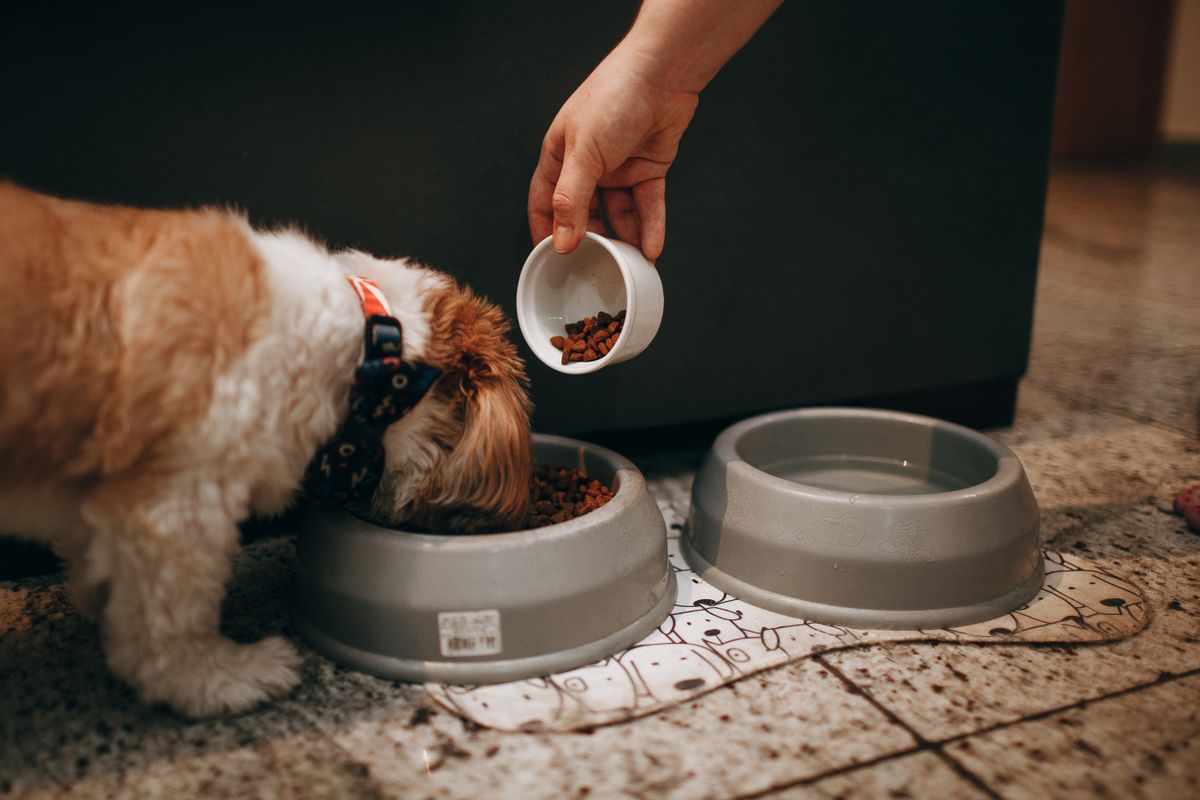
Can I hide a tablet in food?
Only after the prescription instructions or your veterinary practice confirm that food is suitable. PDSA advises checking first because some tablets need to remain whole or be given on an empty stomach. When food is allowed, a small part of the usual meal first can make it easier to see that the entire tablet was eaten. PDSA's guidance on giving a dog a pill is the source for that conditional route.
Do not use this page to choose a carrier food. A dog on an elimination diet has an extra reason to ask first: flavoured medicines and food used to hide them can change the plan. Our guide to treats and medicines during an elimination diet explains the separate food-trial boundary.
Choose one route
Food allowed and a direct technique are different routes
Food is confirmed suitable
Use a small amount first, watch for the whole dose to be eaten, then give the rest of the meal if that matches the instructions. Stop rather than guessing if any tablet remains, is spat out or cannot be accounted for.
Food is not suitable or does not work
Ask the practice to show you a calm direct technique for your dog. Do not turn a difficult attempt into a struggle, improvise a device, or assume the dose has been swallowed.
What if my dog spits the tablet out or resists?
Pause and contact the veterinary practice if the attempts remain difficult. PDSA says some medicines may have a liquid or spot-on alternative that the vet can assess. That is not a permission to swap medicines or use a different product yourself. It is a reason to ask the prescriber what is appropriate for this dog and this prescription.
Do not crush, split or use a pill administrator unless the practice has confirmed it is appropriate and, for a device, demonstrated a safe option. The medicine may have a specific formulation or administration instruction that changes the answer. PDSA's tablet guidance keeps both boundaries with the vet rather than giving a universal technique.
What if the dose is missed?
Follow the packet instructions or ask the veterinary practice what to do. This guide does not set a safe waiting time, dose change or repeat-dose rule because those depend on the medicine and the dog. Our worming guide covers the separate question of risk-based parasite planning; keep the individual product and dose question with the veterinary practice.
When is refusal about more than the tablet?
Not every eating question is a tablet-administration question. If you are also concerned about a change in ordinary eating, keep that separate from this prescription and ask the practice which advice applies. Our guide to a dog who will not eat covers the food-refusal question, while our dental-care guide covers routine dental care as a separate topic.
Questions owners ask about dog tablets
Can I put a dog tablet in food?
Check first. Some tablets need to stay whole or be given on an empty stomach. When food is confirmed suitable, use a small amount first so you can see whether the whole tablet was eaten.
Can I crush or split a dog tablet?
Do not assume that is safe. Ask the veterinary practice before crushing or splitting a tablet because the medicine's formulation and directions may matter.
What if my dog spits a tablet out?
Pause if you cannot account for the whole dose. Contact the practice if administration remains difficult or you are unsure what was swallowed; do not improvise another dose.
Can I use a pill administrator for my dog?
Only after the veterinary practice recommends a suitable option and shows you how to use it safely for your dog. It is not a universal fix for tablet refusal.
What should I do after a missed dog-medicine dose?
Use the packet instructions or ask the veterinary practice. The right action can depend on the medicine, dose and timing, so this guide does not set a general repeat-dose rule.
Source and scope: The food check, small-food route, direct-technique boundary, alternative-form possibility, crushing/device caution and missed-dose boundary follow PDSA's guidance on giving a dog a pill. This is general information about a prescribed tablet, not a medicine choice, dose, food-carrier recommendation, restraint method or substitute for veterinary advice.
picked for this page
Where to go next
More from this guide · 11 min read
Dog Food Allergy Symptoms: What They Mean — and What They Don’t
Food allergies in dogs can cause itching, ear trouble and gut signs, but symptoms alone cannot diagnose them. Compare causes and follow the reliable next step.
Read the guide
