Smelly wind in dogs: when food may be involved
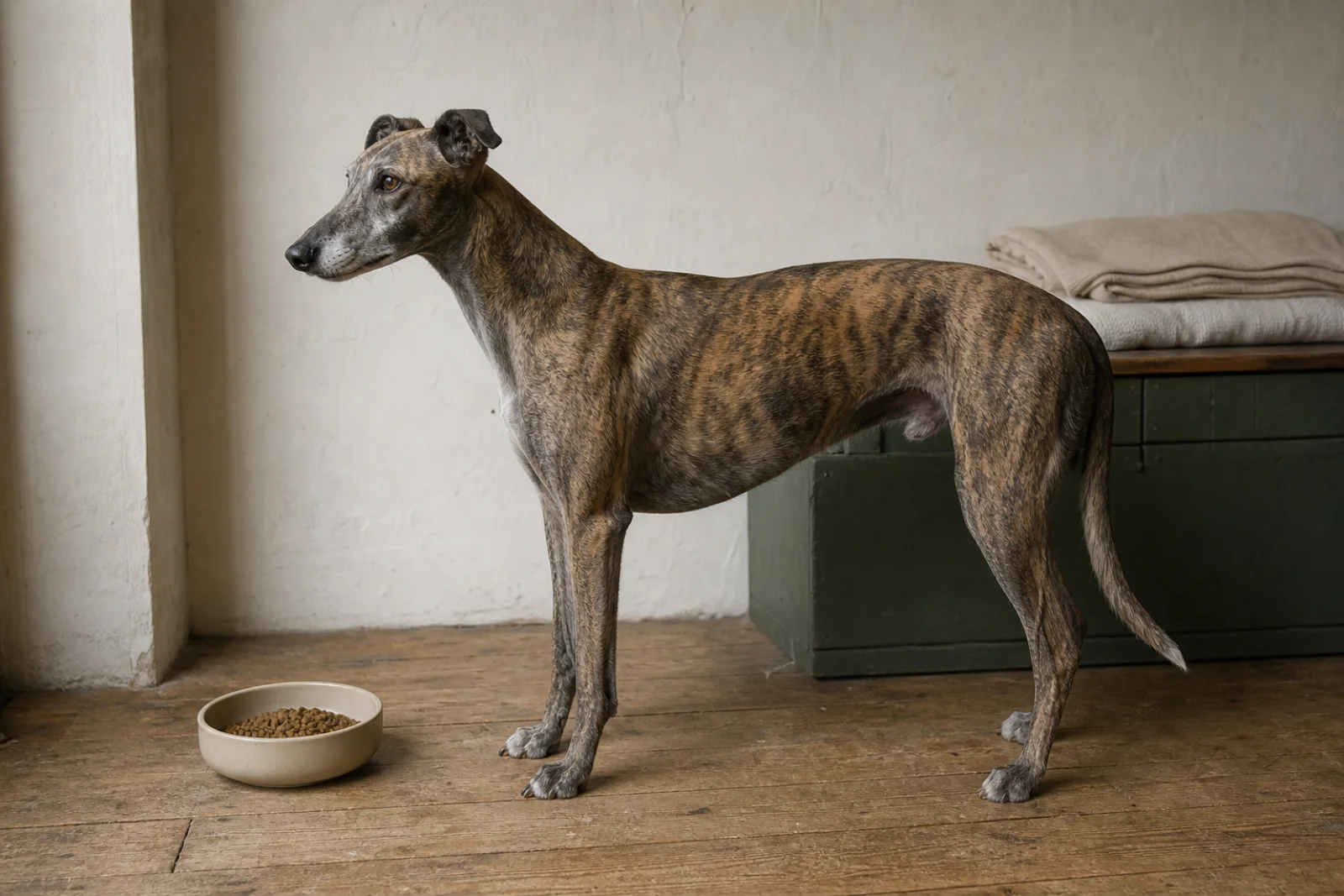
Occasional wind in a dog who is otherwise well is usually normal. Food may be involved when the smell or frequency changes after a new diet, treats, scraps, scavenging or a change in eating pattern, but smell alone cannot identify an intolerance or name an ingredient.
Swollen or tight abdomen, dry retching, pain, weakness or collapse
These are not ordinary flatulence signs. Call your usual or out-of-hours vet now; do not wait to see whether your dog passes gas or try a home remedy. Read the bloat and GDV guide.
New, excessive or recurring wind with other changes
Diarrhoea, vomiting, appetite change, weight loss or obvious discomfort deserve veterinary advice rather than a guessed food fix.
If your dog is otherwise well but has simply become selective at mealtimes, our fussy-dog feeding guide gives you a calm seven-day routine and clear points at which to stop troubleshooting at home.
Occasional wind and an otherwise well dog
Write down the whole intake, recent changes, eating speed and stool pattern. Avoid changing several things at once or giving human medicines.
What flatulence is — and what it cannot tell you
Flatulence is intestinal gas passing through the rectum. A change from your own dog's normal pattern is more useful than a universal “normal” number. Current PDSA guidance on dog farting and gas lists diet changes, scraps or scavenging, eating quickly and digestive upset among reasons to take a changed pattern seriously, but none of those clues proves a diagnosis on its own.
-
01Swallowed air
A dog that gulps a meal may take in more air. This is often called aerophagia; it is a possible contributor, not a diagnosis.
-
02Fermentation in the gut
Some undigested carbohydrate and fibre can be fermented by gut microbes, producing gas. Fibre types differ in fermentability and effect, so a crude-fibre number cannot predict what will happen for one dog (de Godoy 2013; Merck Veterinary Manual).
Neither route identifies a culprit food or tells you to add, remove or supplement anything without a wider assessment.
Could food be involved? Check what changed
| What changed? | What it may suggest | What it cannot prove | Useful next step |
|---|---|---|---|
| New complete food, treats or chews | A timing pattern worth recording. | That one ingredient caused the wind, or that it is an allergy. | Keep a short whole-intake record; speak to the vet if the change persists or other signs appear. |
| Scraps, scavenging or an unusual extra | An extra variable around the same time. | Which part of that food is responsible, or that a supplement is needed. | Record it honestly and avoid stacking more changes. |
| Very fast eating | Swallowed air may be contributing. | A digestive disease, intolerance or a reason to buy a particular feeder. | Note whether the pattern matches meal speed and discuss a persistent problem with the vet. |
| Diarrhoea, vomiting, appetite change or weight loss | The issue is broader than a smell question. | That food allergy or intolerance is already established. | Contact the vet; use the digestive-symptoms guide only after the gas-only boundary is clear. |
What smell cannot tell you about intolerance or allergy
Smelly wind alone is especially non-specific. Digestive signs on their own do not identify a food allergy, and chronic vomiting or diarrhoea belong in a wider veterinary work-up rather than an ingredient-guessing exercise (Mueller and Olivry, 2018). Persistent or recurring gastrointestinal signs need a complete diet history and an assessment matched to the dog's clinical pattern; there is no universal gas food (Heilmann et al., 2026).
- Complete food and any recent change
- Treats, chews, scraps and scavenging
- Meal timing and eating speed
- Stool pattern — use the stool-observation guide for clearer notes
- Vomiting, appetite, energy, weight or discomfort changes
For an otherwise well dog, resist switching several foods or adding remedies at once. If a vet agrees a food change is appropriate, use the established guide to change dog food gradually.
When to contact your vet
Contact your vet for new, excessive, recurring or uncomfortable wind, particularly with diarrhoea, vomiting, appetite change or weight loss. A suddenly swollen or tight abdomen with repeated dry retching, marked restlessness, pain, weakness or collapse is a possible gastric dilatation-volvulus emergency: call now rather than observing at home (Rosselli 2022; PDSA GDV guidance).
Frequently asked questions
Is smelly wind normal in dogs?
Occasional wind in an otherwise well dog is usually normal. A new, more frequent or much smellier pattern is worth recording with food, extras, eating speed and other signs because the change, rather than a fixed number of farts, is useful information.
Why has my dog's wind suddenly started smelling worse?
A recent diet change, treats, scraps, scavenging or a change in eating pattern can be a clue worth recording. Smell alone cannot identify an intolerance, allergy or a specific ingredient; diarrhoea, vomiting, appetite change, weight loss or discomfort need veterinary advice.
Can dog food cause flatulence?
Food can be one part of the picture, especially after a change, but fibre and carbohydrate behaviour varies and no single label number predicts wind for every dog. Avoid jumping straight to a “best” food or a supplement without considering the whole intake and your dog's other signs.
Does smelly wind mean my dog has a food intolerance?
No. Smelly wind alone is non-specific. Digestive signs can have several causes, and food allergy or intolerance cannot be diagnosed from smell, wind frequency or stool alone.
What can I give my dog for bad gas?
Do not give human medicines or a gas remedy without veterinary advice. For an otherwise well dog, record recent food and feeding changes rather than adding several new products; contact the vet if the pattern is new, excessive, recurring or accompanied by other signs.
When is dog flatulence an emergency?
Wind itself is not the emergency. A swollen or tight abdomen with repeated dry retching, marked restlessness, pain, weakness or collapse needs immediate veterinary action because it can be a sign of bloat/GDV.