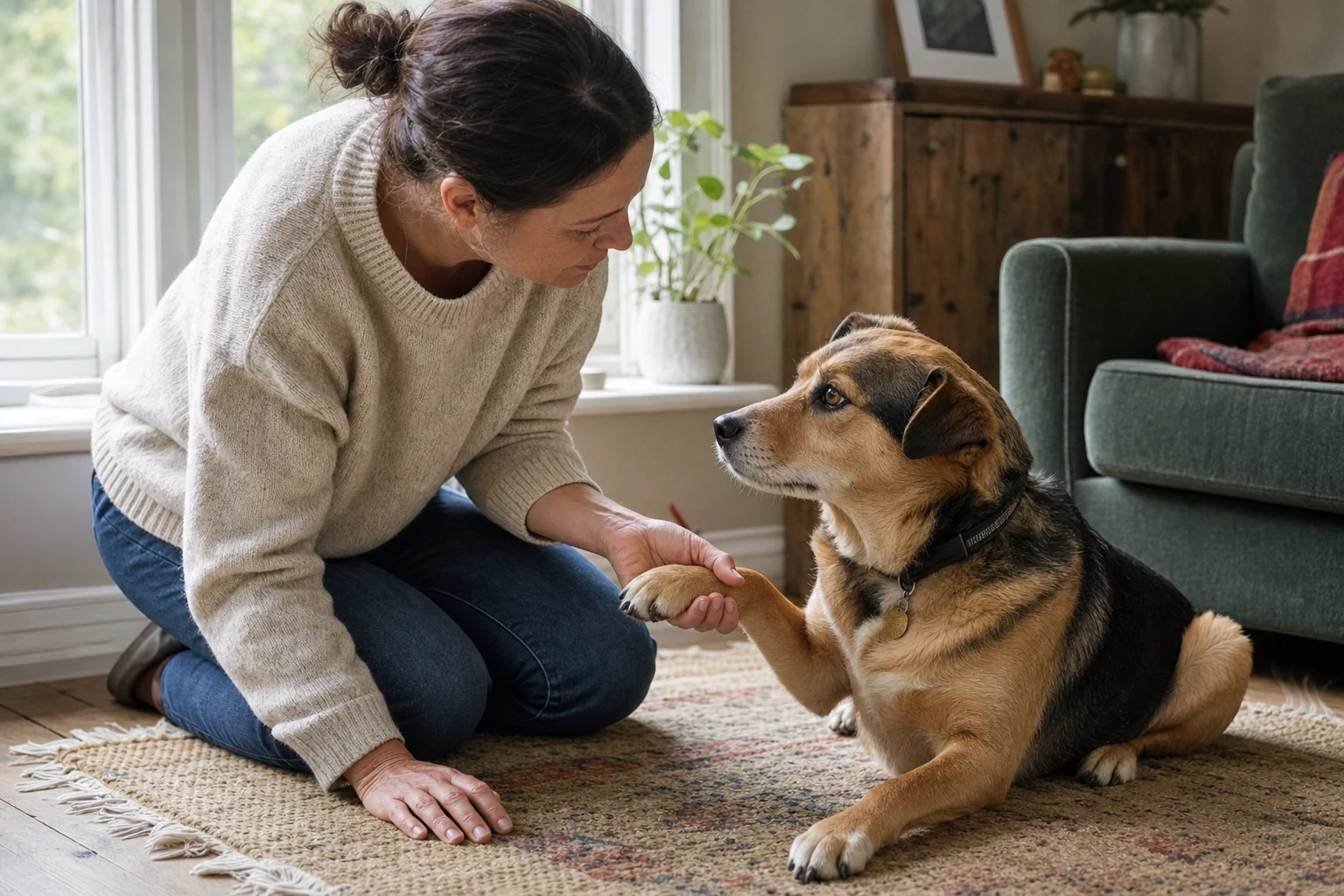
Why Is My Dog Being Sick or Having Diarrhoea — Could It Be Their Food?

If your dog keeps being sick, has runny stools, or seems generally unwell in their gut, it is natural to wonder whether something in their food is to blame. Vomiting and diarrhoea are among the most common reasons dog owners contact their vet, and food is one possibility among many. Both food allergies and food intolerances can produce digestive symptoms in dogs, but they work in very different ways. This article explains what to look for, how the two conditions differ, and what steps to take before assuming food is the cause.
If the appetite change is the main problem rather than one symptom in a wider pattern, use our fussy-eater decision guide to separate urgent warning signs from routine, portion and palatability checks.
the evidence
What you'll learn: Whether food can cause digestive symptoms in dogs. How food allergies and food intolerances differ. What symptoms to watch for. What other causes to rule out first. How to investigate food as a potential cause with your vet.
Digestive Symptoms Are a Common Sign of Food Allergies and Intolerances in Dogs
Digestive symptoms are among the most frequently reported problems in dogs with food sensitivities. Vomiting, diarrhoea, excessive gas, and abdominal bloating can all occur when a dog's digestive system reacts to something in their food. Both a food intolerance and a true food allergy can produce them, and the symptoms on their own will not tell you which you are dealing with. A review of the non-skin signs of adverse food reactions found diarrhoea and frequent defecation were the digestive signs most often reported to settle on a change of diet, and recommended considering an elimination diet early in the work-up of a dog with chronic vomiting or diarrhoea (Mueller & Olivry, BMC Veterinary Research, 2018).
Food-related digestive symptoms can appear at any age, even in dogs who have eaten the same diet for years. This can make the problem difficult to spot at first - if your dog has always eaten chicken and rice without issue, it is natural to assume those ingredients are not the problem. However, food intolerances can develop gradually, while food allergies can surface suddenly after a lifetime of tolerance. The key is to look at the pattern: do the symptoms consistently follow meals, and do they improve when you suspect a particular ingredient is removed?
How Food Allergies Cause Digestive Symptoms
A food allergy is an immune system reaction. When a dog with a food allergy eats the problem ingredient - usually a protein such as beef, chicken, dairy, or wheat - their immune system identifies that protein as a threat. The immune system then produces antibodies and releases inflammatory chemicals, including histamine, to fight what it perceives as an invader.
This immune response can affect the digestive tract directly. Inflammation in the gut lining can impair nutrient absorption, disrupt normal digestion, and cause symptoms such as vomiting and diarrhoea. In some dogs, the immune reaction also causes damage to the intestinal wall, which may produce more severe or chronic symptoms over time.
With a food intolerance, the mechanism is different. There is no immune system involvement. Instead, the dog's digestive system either lacks a specific enzyme needed to break down a substance, or a particular component of the food irritates the digestive tract directly. Lactose intolerance is the most familiar example - many adult dogs lack the enzyme lactase, which means they cannot digest the sugar in milk. The undigested lactose passes into the large intestine, where bacteria ferment it, producing gas, bloating, and watery stools.
Understanding this distinction matters because the investigations and treatments differ. A food allergy requires identifying and permanently removing the problem protein. A food intolerance may be managed by reducing or avoiding the specific ingredient, or by using a supplement such as lactase enzyme where applicable.
What Digestive Symptoms Look Like in Food-Related Reactions
Food-related digestive symptoms in dogs can range from mild to severe, and they may occur alone or alongside other signs such as skin irritation. Here is a practical checklist of symptoms that may indicate a food-related reaction affecting the gut:
Common digestive symptoms in food-related reactions:
- Vomiting, especially shortly after eating
- Diarrhoea, which may be loose, watery, or contain mucus
- Soft stools or stools that have changed in consistency
- Smelly or excessive wind on its own
- Abdominal bloating or a visibly distended stomach
- Gurgling or noisy stomach sounds
- Loss of appetite or reluctance to eat
- Weight loss over time if the problem is chronic
- Signs of abdominal discomfort, such as stretching more than usual or adopting a prayer position
It is worth noting that vomiting and diarrhoea alone are more commonly associated with food intolerance than with food allergy. True food allergies in dogs tend to manifest primarily through skin symptoms - itching, ear infections, hot spots - though digestive signs can occur alongside skin involvement in some cases.
The Difference Between Food Allergy and Food Intolerance When It Comes to Digestion
When digestive symptoms are the primary concern, it is helpful to understand whether a food allergy or food intolerance is more likely.
A food allergy involves the immune system. The dog's immune system reacts to a protein in the food, triggering inflammation that can affect the gut lining. This inflammation can cause vomiting, diarrhoea, and in severe cases, damage to the intestinal villi. Food allergy-related digestive symptoms often develop relatively quickly after eating the problem food - typically within 30 minutes to a few hours - though delayed reactions of 24 to 72 hours are also possible, particularly with cell-mediated immune responses.
A food intolerance does not involve the immune system. The digestive system simply cannot process a particular substance. This might be due to an enzyme deficiency, such as lactase deficiency, or a direct chemical irritation from a food component. Symptoms of food intolerance are usually limited to the digestive tract and tend to be dose-dependent - a small amount of the problem food may cause no reaction, while a larger amount produces noticeable symptoms. Wind, bloating, and flatulence are particularly associated with food intolerances such as lactose intolerance.
The table below summarises the key differences:
| Food Allergy | Food Intolerance | |
|---|---|---|
| System involved | Immune system | Digestive system |
| Primary symptoms | Itching, skin problems, sometimes vomiting or diarrhoea | Vomiting, diarrhoea, gas, bloating |
| Amount needed to react | Tiny amounts can trigger | Dose-dependent |
| Onset | Usually 30 min to 24 hours | Usually 30 min to 12 hours |
| Wind and bloating | Less common | Very common |
For more detail on how to distinguish between the two conditions, see our guide on food allergy vs intolerance in dogs.
Other Causes of Digestive Symptoms to Rule Out Before Assuming Food
Digestive symptoms in dogs have many potential causes, and food is only one possibility. Before focusing on food as the cause, it is important to rule out other common explanations.
Parasites are a frequent cause of vomiting and diarrhoea in dogs. Intestinal worms such as roundworms, hookworms, and whipworms can all produce gut symptoms. Giardia, a single-celled parasite, is another common culprit that causes diarrhoea, particularly in dogs who spend time outdoors or near contaminated water sources. A simple stool sample test by your vet can check for most intestinal parasites.
Infections caused by bacteria such as Salmonella, Campylobacter, or E. coli can produce vomiting and diarrhoea. Viral infections, including parvovirus (particularly in unvaccinated puppies) and coronavirus, are also possible causes. These infections often come with additional signs such as lethargy, fever, or loss of appetite.
Dietary indiscretion - eating something they should not have - is an extremely common cause of digestive upset in dogs. This might include scavenging from bins, eating spoiled food on walks, consuming table scraps that are too rich or fatty, or ingesting a foreign object. Sudden changes in diet can also cause temporary digestive disturbance.
Stress can have a real effect on a dog's gut. Anxiety-provoking events such as fireworks, travel, changes in routine, or the introduction of a new pet can trigger stress-related diarrhoea or vomiting. This is sometimes called stress colitis.
Medical conditions unrelated to food can also cause digestive symptoms. Inflammatory bowel disease, pancreatitis, liver disease, kidney disease, and certain hormonal conditions can all produce vomiting, diarrhoea, or both. These conditions require specific veterinary diagnosis and treatment.
If your dog has persistent, severe, or recurring digestive symptoms, always consult your vet. They can run tests to rule out parasites, infections, and other medical conditions before considering food as the underlying cause.
How to Investigate Whether Food Is Causing Your Dog's Digestive Symptoms
If your vet has ruled out parasites, infections, and other medical conditions, and food is still suspected, the next step is a structured investigation. The elimination diet, conducted under veterinary supervision, is currently considered the only reliable and definitive way to identify food-related sensitivities.
An elimination diet involves feeding your dog a novel source of protein and carbohydrate that they have never eaten before - options might include venison and sweet potato, rabbit and pea, or kangaroo and pumpkin. Alternatively, your vet may recommend a prescription hydrolysed protein diet, where the protein molecules have been broken down into fragments that are much less likely to trigger an immune reaction.
The elimination phase lasts at least 8 weeks. During this time, your dog eats only the elimination food - no treats, no table scraps, no flavoured medications. If the digestive symptoms improve significantly during this period, food sensitivity becomes a stronger possibility.
The rechallenge phase follows. One by one, ingredients are reintroduced while you monitor your dog for the return of symptoms. If a particular ingredient consistently triggers a reaction, that ingredient is identified as the problem.
For a full step-by-step guide to this process, see our article on elimination diets for dogs.
It is important to work with your vet throughout this process. Elimination diets can be nutritionally complex, and sudden dietary changes carry their own risks. Your vet can also help ensure that other conditions are not being overlooked.
60-second check
Is your dog's tummy trying to tell you something?
Six quick questions about the pattern. No right answers, just signals.
We'll email you the 8-week elimination diet guide and a printable symptom tracker. No spam, unsubscribe whenever.
Frequently Asked Questions
Can food allergies cause vomiting in dogs?
Yes, food allergies can cause vomiting in dogs, though vomiting is more commonly associated with food intolerances. When a food allergy does affect the gut, it is because the immune system's inflammatory response irritates the digestive tract. However, vomiting alone is rarely enough to diagnose a food allergy - skin symptoms such as itching and ear infections are more characteristic.
What is the most common food intolerance in dogs?
Lactose intolerance is the most commonly diagnosed food intolerance in dogs. Many adult dogs lack sufficient lactase enzyme to digest lactose, the sugar in milk. This causes gas, bloating, diarrhoea, and abdominal discomfort within a few hours of consuming dairy products. For more information, see our article on dairy intolerance in dogs.
Why does my dog get bloated after eating?
Recurring wind or bloating after meals can have several causes. If the abdomen is suddenly swollen or tight, especially with repeated dry retching, drooling, restlessness, weakness or breathing difficulty, call your vet immediately. Do not wait for every sign. Read our guide to bloat and GDV symptoms. Once a vet has ruled out an emergency, this page can help you investigate a recurring food-linked pattern.
How long does it take for food-related digestive symptoms to appear?
The timing depends on the mechanism. Food intolerance symptoms typically appear within 30 minutes to 12 hours of eating the problem food, as the digestive system struggles to process it. Food allergy symptoms can appear within 30 minutes to 24 hours, depending on whether the reaction is immediate (IgE-mediated) or delayed (cell-mediated). Some delayed reactions may not appear until 24 to 72 hours after eating.
Should I change my dog's food if they have digestive symptoms?
Do not change your dog's food without first consulting your vet. Sudden dietary changes can themselves cause digestive upset, and switching foods without understanding the underlying cause means you may be masking a more serious problem. Your vet can help determine whether food is the likely cause and guide you through an appropriate diet change or investigation.
Can stress cause digestive symptoms in dogs?
Yes, stress is a well-recognised trigger for digestive upset in dogs. Stress-related diarrhoea and vomiting are common, particularly during events such as fireworks, travel, changes in routine, or visits to the vet. Stress colitis typically resolves once the stressor is removed, but chronic stress can contribute to ongoing digestive issues. Addressing the underlying cause of stress and providing a calm, consistent environment can help.
If fireworks are the trigger rather than food, use our before-and-during fireworks plan to prepare the house, respond safely and know when to call the vet.
the food behind the guide
One novel protein.
None of the usual suspects.
Some Grub is a cold-pressed, hypoallergenic dog food built around insect protein - a protein most dogs have never met, which is the whole point of a food trial.
See the food →This article is for informational purposes only and is not a substitute for professional veterinary advice. If your dog is experiencing digestive symptoms, consult your veterinarian to determine the cause and appropriate treatment. Always seek veterinary guidance before making changes to your dog's diet or starting any new health regimen.
Last updated: April 2026
picked for this page
Where to go next
About loose stools · 14 min read
Why Is My Dog Being Sick? Food Allergies vs Other Causes
Yes, and food allergies are a common cause of ongoing sickness and loose stools. How to tell an allergy from an intolerance or a simple infection.
Read the guide